
After Dark Guide
Can You Put Permanent Lights on a Tile or Metal Roof?
Yes. On most Florida homes the track mounts to the fascia, so your tile or metal roof is never touched. Here is how it is done without cracking a tile or voiding a warranty.
Yes, you can. It is one of the most common questions we get in Tampa Bay, where barrel tile and standing-seam metal are everywhere, and the honest answer is that on most homes your roof is never touched at all. Permanent architectural lighting mounts to the fascia and eave, not to the roof surface, so the tile or metal stays exactly as it is. Here is how that works, roof type by roof type, and what to ask any installer before you sign.
Why tile roofs make people nervous
A cracked barrel tile is expensive, and a lot of homeowners have watched a handyman step wrong on a roof and split three of them. So when the conversation turns to lighting a Mediterranean or Spanish-style home, the first worry is always the same: are you going to be walking my tile and drilling into it?
For our permanent system, the answer is no. The mistake people picture, fasteners driven through tile or shingle, is not how a professional permanent system is mounted. It goes on the flat vertical face of the fascia board or up under the soffit, which is wood or aluminum trim, not roofing material.
Permanent lighting mounts to the fascia, not the tile
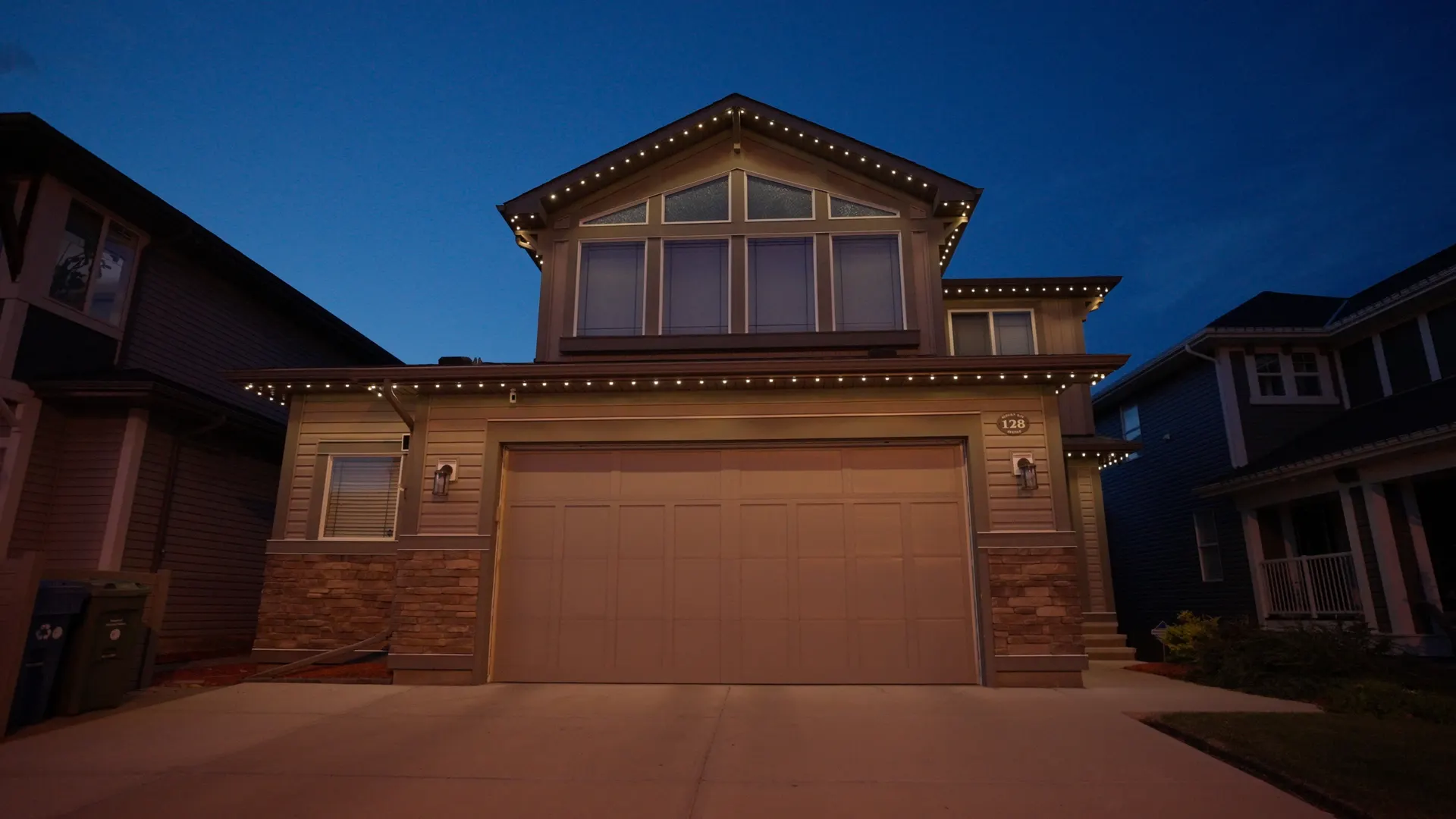
The system is a slim, color-matched aluminum track. We fasten it to the fascia or tuck it under the eave, run the low-voltage wiring hidden behind it, and the LEDs sit down in the channel. Nothing penetrates the roof deck, nothing lifts a tile, and there is no adhesive holding weight on a hot roof. Because the track lands on the trim line rather than the roof, the roof type mostly stops mattering: tile, metal, shingle, or flat, the fascia is the fascia. And because nothing goes through the roof, the install does not touch your roofing warranty. That is also why the system disappears in daylight and reads as part of the house.
If your specific worry is damage rather than roof type, we wrote a full guide on whether permanent lights damage a roof that covers penetration, warranties, and what a careful install looks like.
Metal and standing-seam roofs
Metal is actually one of the easier roofs to work around for exactly the same reason: we are on the fascia, not the panels. On a standing-seam or corrugated metal home we still trace the roofline along the eave and gables, and the finished look is identical to a shingle home. The one thing metal changes is that the crew plans the run and the transitions carefully so the track sits clean against the trim, which is the kind of detail a rushed install skips and a designed one does not.
Flat and low-slope roofs
Flat and low-slope homes, common on modern Tampa Bay builds, are lit a little differently because there is less traditional roofline to trace. Here the design leans on the parapet edge, the fascia, and the architectural features that give the house its lines, plus landscape and facade lighting to carry the look at ground level. A flat roof is not a dealbreaker; it just changes where the light goes.
What about Christmas C9 lights on a tile roof?
This is the one case where clips do touch the roof edge, because traditional C9 holiday lighting is clipped along the roofline rather than tracked to the fascia. On tile and metal, that means using clips designed for those edges and a crew that knows how to seat them without prying or cracking a tile. It is careful, slower work than stapling to a plain shingle fascia, and it is exactly the kind of thing a cut-rate seasonal installer gets wrong. A professional C9 install is measured and clipped to the specific roof, not forced onto it.
What to ask any installer before you sign
Whether it is us or anyone else, these questions sort a careful installer from a risky one:
- Where exactly does the track or clip attach: the fascia, the soffit, or the roof itself?
- Does anything penetrate the roof deck or the tiles?
- How do you handle transitions and corners on a tile or metal edge?
- Is the wiring hidden and rated for Florida sun and heat?
- What happens to a tile if one does crack during the work?
Common questions
Will installing permanent lights crack my tiles? It should not, because the track mounts to the fascia and eave, not the roof surface. The crew works off the trim line and does not walk the field of the tile to install the system.
Do you drill into the roof? No. The system fastens to the fascia board or soffit and the wiring runs hidden behind it. There is no penetration of the roof deck.
Can you light a modern flat-roof home? Yes. The design shifts to the parapet, fascia, and architectural features, and often pairs roofline work with landscape and facade lighting to carry the look.
If you have a tile, metal, or flat roof and want to see how the lines would trace on your specific home, start with a free design consultation and we will walk it with you.



Want this on your home?
Book a free design consultation. We will walk your property, design the look around your rooflines, and hand you a clear written quote with no obligation.