
After Dark Guide
Will Permanent Lighting Damage My Roof? No, and Here's Exactly Why
The biggest fear before installing permanent lights is holes in the roof. A professional low-voltage install never touches your shingles or tile. Here is how.
The picture in your head is a crew up a ladder, driving nails into your shingles, and a slow leak that shows up during the next storm. It is the single most common reason homeowners hesitate before installing permanent lights. The honest answer is that a professional low-voltage install never penetrates your roof, and once you see where the track actually mounts, the worry goes away for good.
Where the track actually attaches
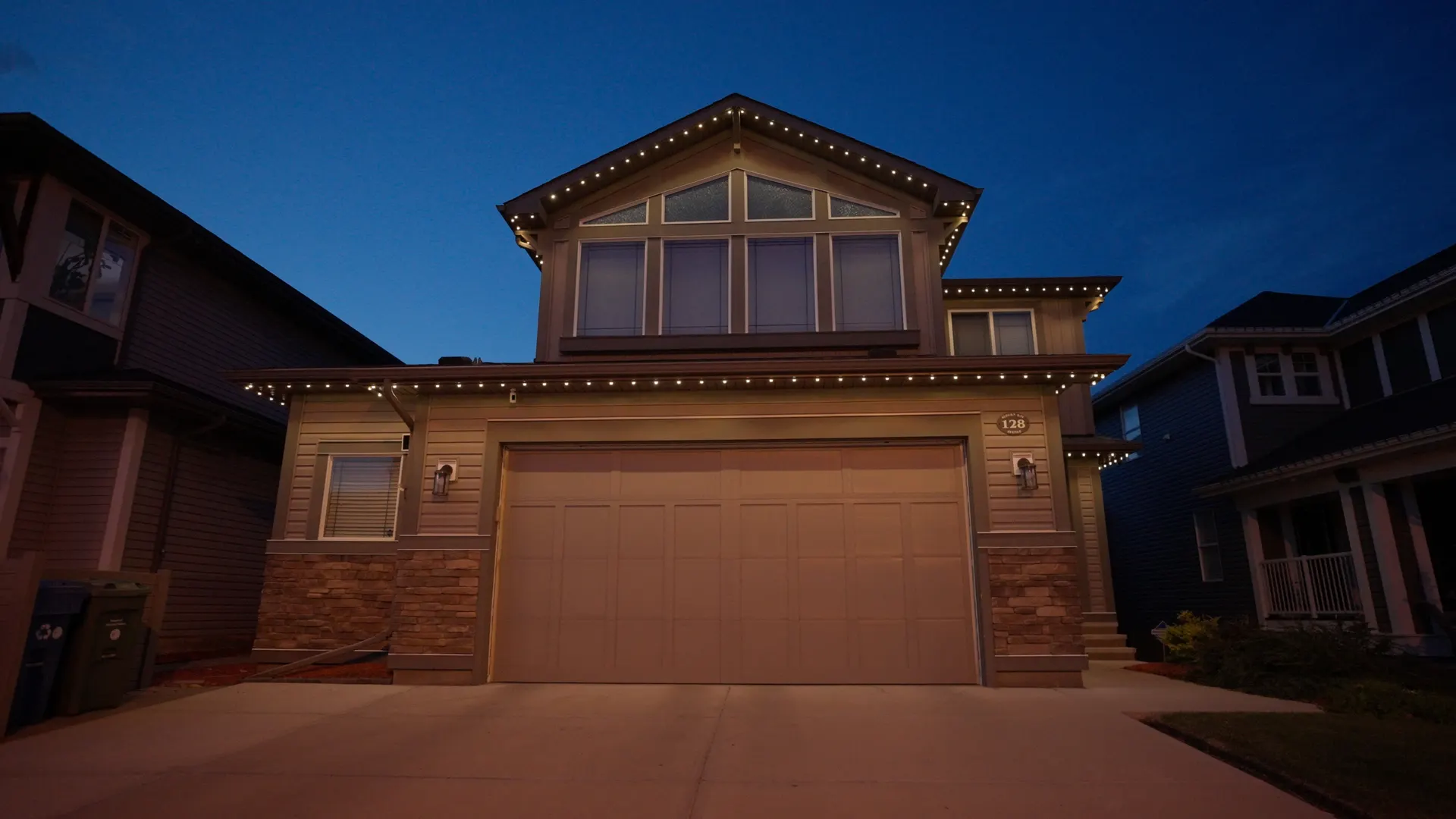
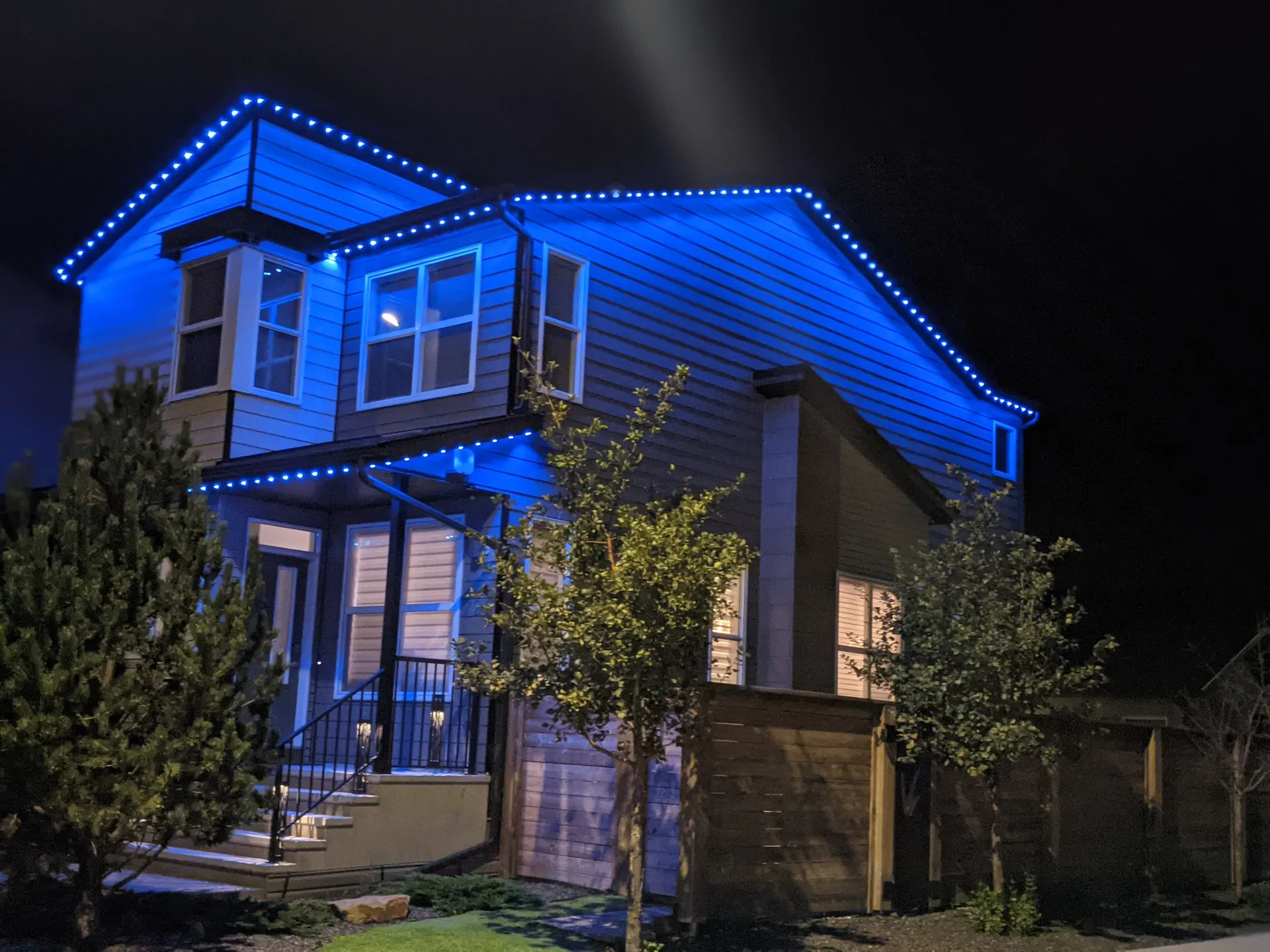
A permanent lighting track does not go on the roof. It mounts to the fascia and the soffit, the vertical trim board along your roofline and the horizontal underside of the eave. Those are the exact surfaces your gutters and trim already attach to, and they sit below and beside the roof field, not on it. The shingles and tile that keep water out of your home are never touched, never lifted, never drilled.
So when someone asks whether Permanent Architectural Lighting means holes in the roof, the answer is no. The system is designed from the start to live on the trim line, which is why a clean install reads as part of the house instead of something stuck onto it.
Mechanically fastened and sealed, the right way
On the fascia and soffit, the channel is mechanically fastened with the correct fasteners for the substrate and then sealed at every point that matters. This is standard trim-line work, the same approach a careful contractor uses to hang a gutter or set a fascia board, and it is code-conscious from the first screw to the last. There is no guesswork, no improvising, no hoping the adhesive holds through August.
Sealing is the part DIY kits skip entirely, and it is the part that protects the home. A properly sealed fastener point keeps water on the outside of the assembly where it belongs. With 25 plus years of low-voltage experience behind every install, we treat each penetration into trim as something to seal, not something to leave open to the weather.
Why low-voltage is inherently lower risk
Permanent lighting runs on low-voltage power, not the 120 volts in your wall outlets. That single fact changes the risk profile around your roofline. There is no high-voltage line being run along the eave, no heavy gauge cable to staple down, no 120-volt connection sitting in the weather. The hardware is purpose-built for outdoor low-voltage use, sealed against humidity and rain, and the track itself is color-matched aluminum that disappears against white or bronze trim in daylight. You get the safer electrical system and the cleaner look in the same install.
This is the opposite of the DIY path. Nail-in clips, staples, hot glue, and pressure clips are exactly the methods that genuinely do risk punctures and water intrusion. A nail through the wrong spot, a staple into a shingle, a clip that pries up a tile edge: those create the leaks homeowners are right to fear. A sealed, fastened, low-voltage track on the trim line does not.
The Florida stakes are real
In Tampa Bay this is not a small detail. Storm season puts every roof penetration to the test, and a single unsealed hole becomes a problem the first time wind drives rain sideways across Trinity, Lutz, Wesley Chapel, or Palm Harbor. Tile roofs raise the stakes further, because a cracked or lifted tile is expensive to fix and easy to cause with the wrong fastener. On top of that, many roofing manufacturers exclude unauthorized penetrations from coverage, so it is worth checking your specific warranty terms. Either way, keeping the entire system off the roof field is one less thing to worry about.
That is the whole reason the trim-line approach matters here more than almost anywhere. We are a family owned, licensed, insured, and certified company, and we install with the local climate in mind because we live and work in it too.
Common questions
Will the install void my roof warranty? In most cases, no. Nothing we install penetrates the shingles or tile, and the track lives on the fascia and soffit, the same trim your gutters attach to, so the roof system itself is never altered. For total certainty on your specific coverage, check your manufacturer’s warranty language on trim-line attachments.
What is the difference between this and DIY clip-on lights? DIY methods use nails, staples, hot glue, or pressure clips that can puncture shingles, crack tile, and let water in. Our track is mechanically fastened to the trim and sealed at every point, runs on low-voltage rather than 120 volts, and is built for Florida weather. The difference is a sealed, code-conscious system versus a row of hardware pressing on your roof.
How do I know it is right for my home before I commit? We come out, look at your specific roofline and trim, and design the layout around what your architecture gives us. You get a written, no-obligation quote with clear pricing before any work begins. Start with a free design consultation or call us at (727) 222-3111 and we will walk it with you.
Want this on your home?
Book a free design consultation. We will walk your property, design the look around your rooflines, and hand you a clear written quote with no obligation.