
After Dark Guide
Do Permanent Lights Use a Lot of Electricity? The Real Cost
The honest number: running a permanent LED system costs most homes only a few dollars a month, even lighting the house every night. Here is the Florida math, worked out.
It is one of the first questions people ask once they get past the install cost: if the lights live on the house year-round, are they going to quietly run up my power bill? The honest answer is no, and it is not close. Running a permanent LED system costs most homes only a few dollars a month, even lighting the house every single night. Here is why, with the Florida math worked all the way out so you can see the number for yourself.
The short answer, in dollars
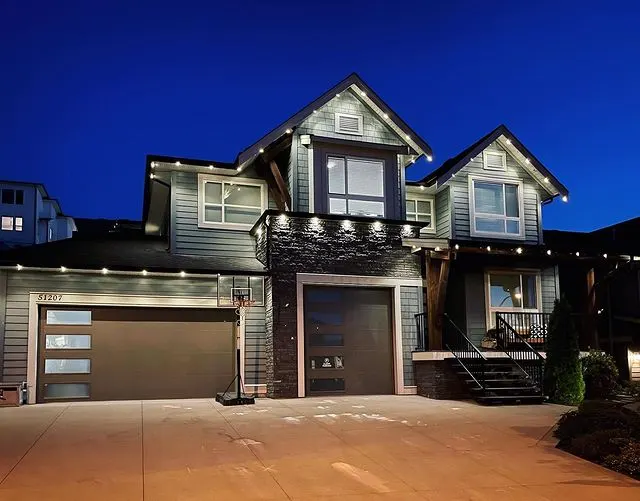
A permanent architectural system is all low-voltage LED, and LEDs sip power. Industry figures put a typical permanent roofline system somewhere between about 100 and 300 watts, running roughly six hours an evening, which works out to an estimated $5 to $20 a month depending on how big the system is and how long you leave it on. Most homes running warm white a few hours a night land at the bottom of that range, not the top. For context, that is in the neighborhood of what one bright porch light on all night costs, spread across your whole roofline.
Why LEDs cost so little to run
This is the whole reason the number is small. LEDs draw a small fraction of the power the old incandescent bulbs pulled for the same light, which is exactly why the U.S. Department of Energy has been phasing the old bulbs out nationwide. The strings of C7 and C9 incandescent bulbs people picture when they think “outdoor lights,” the ones that used to make the meter spin every December, are a different technology entirely.
A permanent system is also run smart, which drops the number further. Most nights it holds a soft warm white rather than every color channel at full blast, and it runs on a dusk-to-dawn schedule or shuts off at a set hour instead of burning all night. Warm white at a sensible brightness for a few evening hours is about the cheapest way a whole house can be lit.
The Florida math, worked out
Let us actually run it. The formula is simple: watts divided by 1,000, times hours, times your electricity rate.
Take a mid-size system at around 200 watts, running six hours a night, every night:
- 200 watts is 0.2 kilowatts. Over six hours that is 1.2 kilowatt-hours a night.
- Across a 30-day month, that is about 36 kilowatt-hours.
- Florida’s residential electricity rate runs about 15 to 16 cents per kilowatt-hour, which is roughly 21 percent below the national average.
- 36 kilowatt-hours at 16 cents is a little under six dollars a month.
Even if you ran a larger system, or left it on all the way to dawn, you are still looking at single digits to low double digits a month, right in that industry range. And because Florida’s power is cheaper than most of the country, your real number tends to sit under the estimates you will see quoted nationally.
What actually moves the number
Three things, in order of how much they matter:
- How long you run it. Six hours a night costs half of twelve. The dusk-to-dawn schedule is convenient, but if you want the lowest possible bill, have it shut off when you go to bed.
- How big the system is. A single-story ranch is a smaller draw than a two-story home with every gable and dormer traced. More track means more LEDs.
- Color and brightness. Full-color, full-brightness holiday scenes pull more than everyday warm white at a moderate level. Since the color show is a handful of nights a year and warm white is the other 350, this barely registers over twelve months.
Notice what is not on the list: leaving it up year-round. The system being permanent does not cost you anything extra to run. It costs the same to light warm white in July as in December.
The part people miss
The running cost is not the interesting number. The interesting number is what a permanent system replaces: the yearly bill for hanging and removing seasonal lights, or the clip-on kits you re-buy every year or two when they fade and sag. A few dollars a month in electricity is rounding error next to that. If you are weighing the whole picture, we lay out the full math on whether permanent lights are worth it, and the durability side on how long they last.
Common questions
Do permanent lights use a lot of electricity? No. A typical low-voltage LED system runs most homes an estimated $5 to $20 a month, and less if you run warm white only a few hours a night. LEDs draw a small fraction of the power those old incandescent bulbs did, which is why the number is so small.
Does leaving them up all year cost more? No. The system is permanent, but you only pay for the hours it is actually on. Warm white in the off-season costs the same per hour as the holiday display, and you control all of it from the app.
Will it noticeably change my power bill? For most homes, a few dollars a month is not something you would spot on the bill. Running hours and system size move it more than anything, and Florida’s below-average electricity rate keeps it on the low end.
Want the real number for your specific home? Start with a free design consultation and we will size the system and walk you through both the install and the running cost, with no obligation.
Want this on your home?
Book a free design consultation. We will walk your property, design the look around your rooflines, and hand you a clear written quote with no obligation.