After Dark Guide
How Much Does JellyFish Lighting Cost?
JellyFish Lighting runs about $25 to $35 per linear foot installed, or roughly $3,000 to $6,000 for a typical front-of-home system. Here are the real numbers, what the per-foot quote leaves out, and how it reads on a Gulf Coast home.
JellyFish Lighting is a strong, proven permanent lighting system, one of the names that put the whole category on the map. So if you are pricing it, you are asking a smart question. The honest answer is that a JellyFish system runs about $25 to $35 per linear foot installed, or roughly $3,000 to $6,000 for a typical front-of-home layout. What most cost pages leave out is what that per-foot number does and does not include, and how it actually reads on a Tampa Bay home with a tile roof and salt air. Below are the real published numbers, cited, then the part the calculators skip.
What a JellyFish Lighting system actually costs
Start with the company’s own figure. Per JellyFish Lighting’s pricing blog, most homeowners spend between $3,000 and $6,000 for a system on the street-facing sides of the home, with an average around $4,600. Their installed rate lands at about $25 to $35 per linear foot, and the controller that runs the system is a separate line item at $650 to $850.
Zoom out to the whole category and the range is similar. National cost data from HomeGuide puts permanent LED lighting at $20 to $40 per linear foot installed, or about $2,000 to $8,000 total for a typical home. So JellyFish sits right in the middle of the market, which is what you would expect from an established brand. You are not overpaying for the name, and you are not getting a discount for it either.
For context, an independent breakdown from ThePricer, updated November 2025, matches those numbers almost exactly: $25 to $35 per foot plus a $650 to $850 controller, with most front installs at $3,000 to $6,000. When the manufacturer, a national cost index, and a third-party pricing site all land in the same band, you can treat it as real.
Cost by the linear foot, and by home size
Almost every permanent lighting company, JellyFish included, prices by the linear foot, meaning the length of roofline, eave, and fascia you want lit. Here is how the published per-foot rates compare:
| Source | Per linear foot, installed |
|---|---|
| JellyFish Lighting (own pricing) | $25 to $35 |
| National / industry (HomeGuide) | $20 to $40 |
| Dallas installer example (DFW LED Lite) | $30 to $40 |
That Dallas figure comes from DFW LED Lite, a Texas installer whose page was reviewed in September 2026. It is a useful reminder that the rate moves by market and by who is quoting it, not a national truth. Your Gulf Coast number will be its own.
Footage is the number everything multiplies against, so it helps to see it by home. These totals come from ThePricer’s worked examples, and they line up with JellyFish’s own $4,600 average:
| Home | Roughly | Typical installed |
|---|---|---|
| Single-story front only | ~75 ft | ~$2,750 |
| Standard front, most homes | ~110 ft | ~$4,200 |
| Larger or wraparound front | ~160 ft | ~$6,800 |
| Two-story or whole-home wrap | 200+ ft | $6,000 to $8,000+ |
None of those is your price, because no two rooflines are the same, which is exactly why we measure and quote your specific home for free instead of reading you a number off a chart. But they are honest market ranges to anchor against.
What the per-foot number quietly leaves out
This is the part the cost calculators skip, and it is where a quote surprises people. The headline per-foot figure is a starting point, not the whole invoice. Four things sit underneath it:
- The controller is separate. JellyFish lists the controller at $650 to $850 on top of the per-foot install, per their own pricing. One controller drives a lot of house, so most homes only need one, but confirm whether a quote folds it in or adds it after.
- The quoted number is usually street-facing only. JellyFish’s own $3,000 to $6,000 range is for the front and visible sides. If you want the full home wrapped, the back, the lanai, the pool cage line, the footage climbs and so does the total.
- It runs through a local dealer. JellyFish is installed by authorized dealers, and the labor side of the warranty is handled by whoever hangs it. So the crew on your roof, and how long they have been doing this in your market, matters as much as the brand on the box.
- Running it is cheap, and that is real. ThePricer measures a system at roughly 4 to 4.5 watts per foot, about 1.1 to 1.2 kWh a night, which at $0.16 per kWh is a few dimes an evening. Any quality permanent LED system, JellyFish or otherwise, costs almost nothing to run.
On financing, dealers commonly offer 0 percent or low-APR options to stage a $3,000 to $6,000 purchase, per ThePricer. Terms vary by dealer, so ask.
What moves a JellyFish quote on the Gulf Coast
Here is what almost every JellyFish cost page misses. The national guides price a generic house, and even the Florida-titled ones admit it: one Florida cost breakdown from November 2025 lists no Florida-specific pricing at all, just national averages with a regional percentage swing. Lighting a home in Tampa Bay or Tarpon Springs is not generic. A few things particular to the coast move the number, and they are worth knowing before you compare bids:
- Tile and standing-seam metal roofs. A lot of homes here wear barrel tile or metal. Both need mounting methods and channel that will not crack a tile or void a roof warranty, and that is slower, more careful work than clipping to a simple shingle fascia. It shows up in any honest quote, whoever gives it.
- Salt air and coastal humidity. Waterfront and near-coastal homes ask more of every connector, cap, and channel. Marine-grade sealing and corrosion-resistant hardware are not upsells on the Gulf, they are the difference between a system that survives its first storm season and one that does not.
- Two-story coastal traditionals. Height and complex rooflines are the single biggest driver on any install. A two-story home with peaks, dormers, and a wrapped porch takes more time and rigging than a single-story ranch, and the labor reflects it.
- Palms and mature oaks. Coastal facades often pair with landscape lighting rather than tree wrapping, but if your layout includes trees or a lanai line, that footage is priced too.
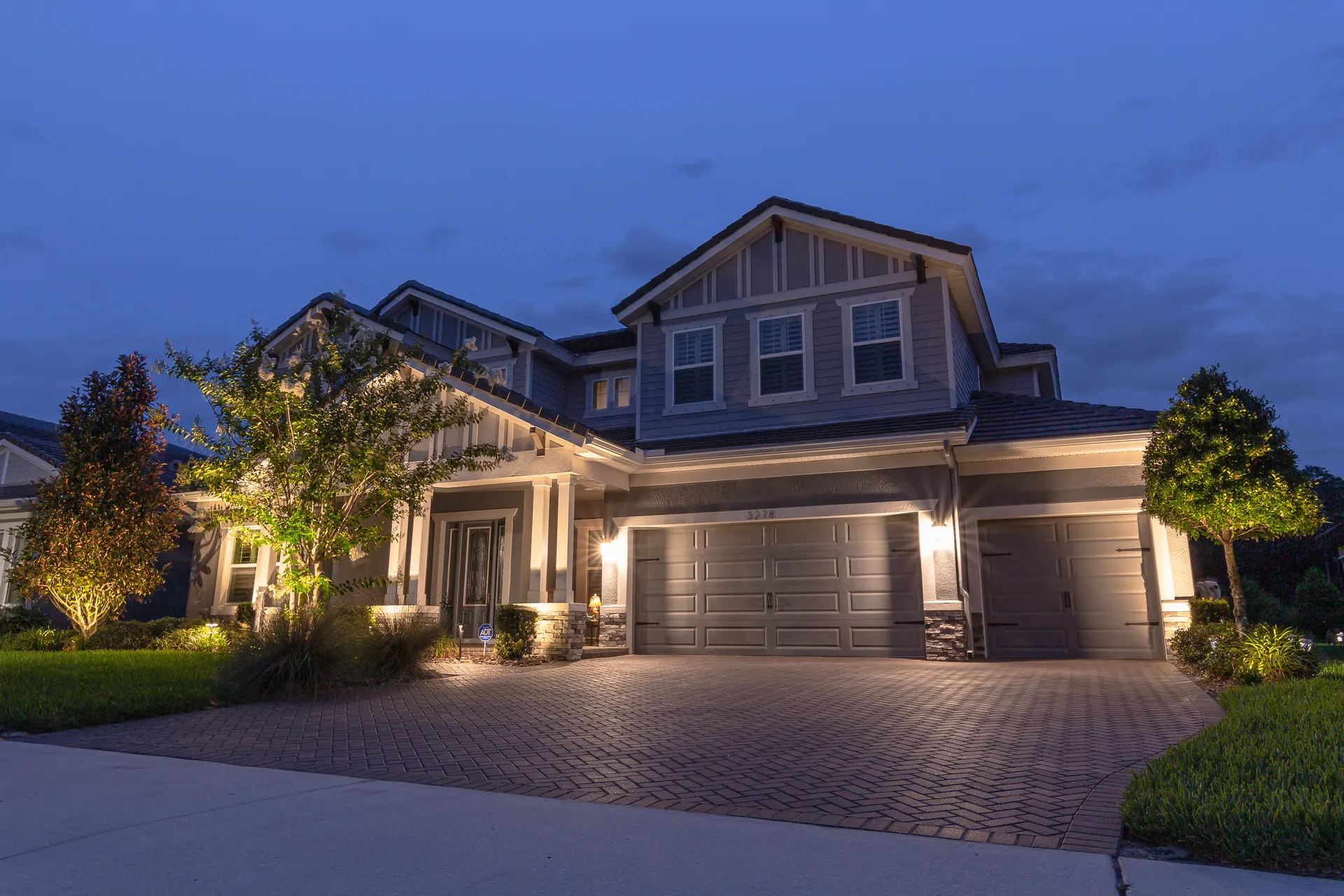
- HOA and neighborhood rules. Plenty of Tampa Bay communities have color and brightness guidelines. A permanent system that can dial down to a tasteful warm white year-round, then switch to color only on the nights you want it, is usually the easiest one to get approved.
The warranty, and why who installs it matters
JellyFish backs its residential systems with a solid warranty: five years on parts and one year on labor, per JellyFish Lighting’s FAQ. That is a real, category-leading parts warranty and a fair reason the brand earned its reputation. Give it its due.
Two honest notes for your budgeting. First, the labor coverage is one year, while the parts coverage is five, so a service call in year three is a parts-covered repair with a labor charge, depending on your dealer. Second, because a local authorized dealer manages that labor warranty, the strength of your coverage is really the strength of the company that installed it and whether they are still around and responsive in your market five years from now. A national brand warranty is only as good as the local hands standing behind it.
JellyFish versus a custom local system: reading the whole quote
JellyFish is a genuinely good system, and for a lot of homes it is a fine answer. The reason to also get a quote from a local custom installer like us is not that one brand is bad, it is that the two are priced and built differently, and you want to compare the whole thing, not just the per-foot line.
A few things we would tell you to weigh, honestly:
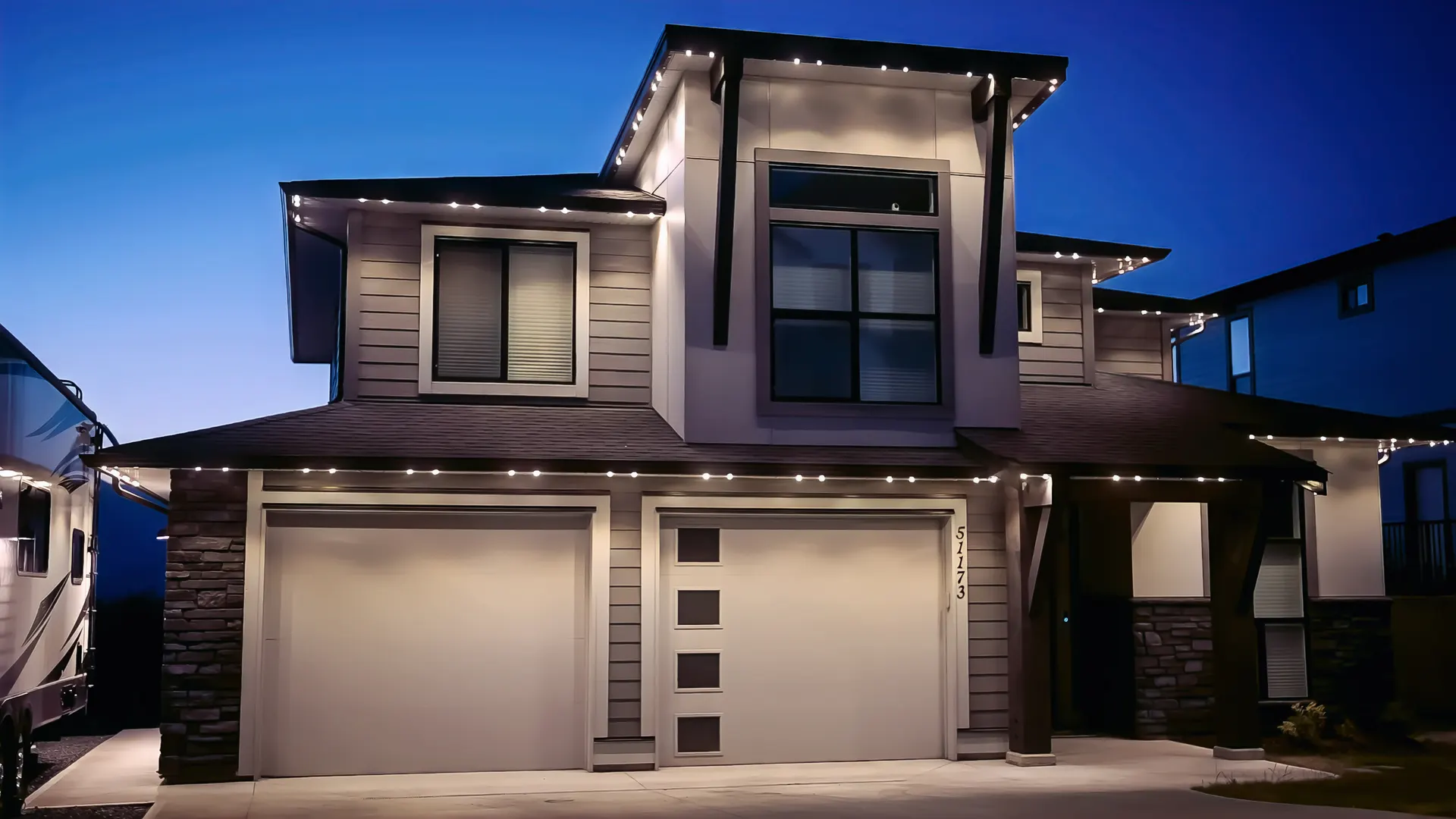
- The look you actually want. We lead with a warm white that reads like architecture instead of a light show, and we show it with photos of the system we install rather than renderings. Quality permanent systems, JellyFish included, can render warm white too, so the question is which install nails the specific tone and evenness you want on your fascia. Ask to see finished local homes at night, from anyone.
- App control and full color, done right. A permanent system like ours or JellyFish’s is app-controlled, fully color-capable, and color-matched to your home, so it covers warm white every night and color for the holidays and game days. That is the whole point of permanent over seasonal C9, which is a fixed classic look you put up and pull down each year. Our permanent architectural lighting page walks through what the system does day to day.
- Local install, local accountability. We measure, design, and quote your exact home for free, and we are the ones who service it, so there is no chain between you and the crew that hung it.
We do not publish a flat price because a fair one depends on your footage, your roof, and what you want lit, and anyone who reads you a number over the phone is guessing. What we can tell you is that we quote every home free and stand behind our own work. If you want the side-by-side laid out plainly, our JellyFish comparison page does exactly that, brand strengths and all.
If you are also weighing a permanent system against paying for lights every December, our guides on Christmas light installation cost and permanent versus temporary run that math in full. JellyFish’s own blog notes that seasonal installers can cost $1,000 or more every year, which is the recurring bill a permanent system is meant to end.
Common questions
How much does JellyFish Lighting cost per foot? About $25 to $35 per linear foot installed, per JellyFish’s own pricing, which sits inside the $20 to $40 national range for permanent LED lighting. The controller is a separate $650 to $850, and the per-foot number is usually for the street-facing sides only.
Why is the quote higher than the simple per-foot math? Three reasons, usually. The controller is added on top, the quoted footage often covers only the front, and a whole-home or two-story wrap adds length. A Florida coastal home can also carry tile-roof mounting and marine-grade sealing that a generic national calculator never accounts for.
Does JellyFish have a good warranty? Yes. Five years on parts and one year on labor is a strong, category-leading warranty, per JellyFish. The one thing to check is that the labor side is managed by your local authorized dealer, so how established that installer is in your market matters over the life of the system.
Is a permanent system worth it in Florida specifically? For most homeowners who are tired of ladders and seasonal bills, yes. It covers a tasteful warm white every night of the year and color when you want it, it runs for pennies, and it ends the yearly hang-and-pull cost. The Gulf Coast caveat is corrosion, so make sure whoever you hire uses coastal-grade hardware and knows tile and metal roofs.
Can I get a tasteful warm white, or is it all bright color? You can absolutely keep it to a clean warm white year-round. A good permanent system dials from warm white for everyday to full color for the holidays, all from an app, so it is as understated or as festive as you want on any given night.
If you want a real number for your home instead of a range off a chart, start with a free design consultation. We will measure it, show you finished homes near you, and quote your exact roofline, no phone-number guessing.
Want this on your home?
Book a free design consultation. We will walk your property, design the look around your rooflines, and hand you a clear written quote with no obligation.