
After Dark Guide
Deck, Step, and Stair Lighting for Tampa Bay Homes
The deck and the steps are the parts of the yard you use most after dark, and the parts most likely to trip someone. Here is how low-voltage lighting makes them safe and beautiful at once.
A deck and a run of steps are the parts of a yard you actually use after the sun goes down, and they are also the parts most likely to send someone reaching for a railing that they cannot see. Good deck and step lighting solves both problems in one pass: it makes the space usable and genuinely beautiful at night, and it makes every edge and elevation change safe to move across. Here is how it is done well.
Two jobs at once: safe to walk, good to look at
Most outdoor lighting is decorative. Deck and step lighting has to be decorative and functional at the same time, which is what makes it worth doing right. Done well, you never notice the fixtures. You notice that you can see every step, that the deck feels like an outdoor room instead of a dark platform, and that no one is feeling for the edge with a foot. The light does the safety work quietly, and the beauty is what you actually see.
Where the light goes
A deck or stairway is lit in layers, from a few small sources rather than one bright one:
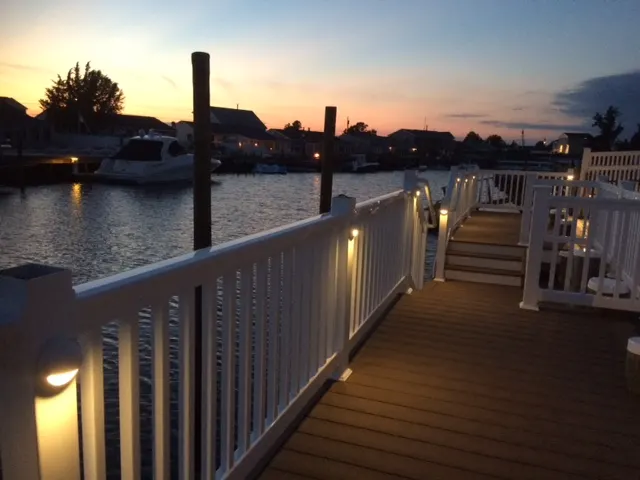
- Step and stair risers. A low, warm line of light tucked under each tread, so every step reads clearly without a glare in anyone’s eyes. This is the single highest-value place to put light in the whole yard.
- Railings and posts. Soft light worked into the railing or post caps outlines the deck and gives it shape after dark, so the structure reads instead of disappearing.
- Under a bench or a bar top. Hidden light under built-in seating or a rail lip washes down onto the deck surface and makes the space feel finished.
- The surround. Uplighting on a nearby tree or a wash across the wall behind the deck gives the whole scene depth, so the deck is part of a lit yard, not a bright island in a black one.
Steps are a safety issue, not just a look
This is the part worth being plain about. A step you cannot see is a step you can miss, and outdoor stairs get walked in the dark by guests who do not know the property, by kids, and by anyone carrying something with both hands. Lighting each riser turns a guessed-at edge into an obvious one. It is the kind of thing you install once and quietly benefit from every single evening, and the reason step lighting is the first thing we design on almost any deck or elevated patio.
Low-voltage, and built for Florida
Deck and step lighting is all low-voltage, which matters twice over. It is inherently safer than line-voltage wiring in a spot people touch and stand on, and it is far easier to run cleanly through a deck frame or hardscape without tearing anything up. Just as important here is durability: a deck bakes in the sun and sits in Florida’s humidity and afternoon storms all year. We use sealed fixtures built for wet, coastal conditions, because the stick-on and solar step lights from a big-box store corrode, cloud over, and quit within a season or two in this climate.
Warm and hidden, never glaring
The fastest way to ruin a deck at night is a bright, cold light pointed at eye level. We aim for the opposite: warm-toned light, kept low and shielded, so you see the glow on the steps and the deck surface and not the source. It is the difference between a space that feels like a restaurant patio and one that feels like a loading dock.
How it fits with the rest of the yard
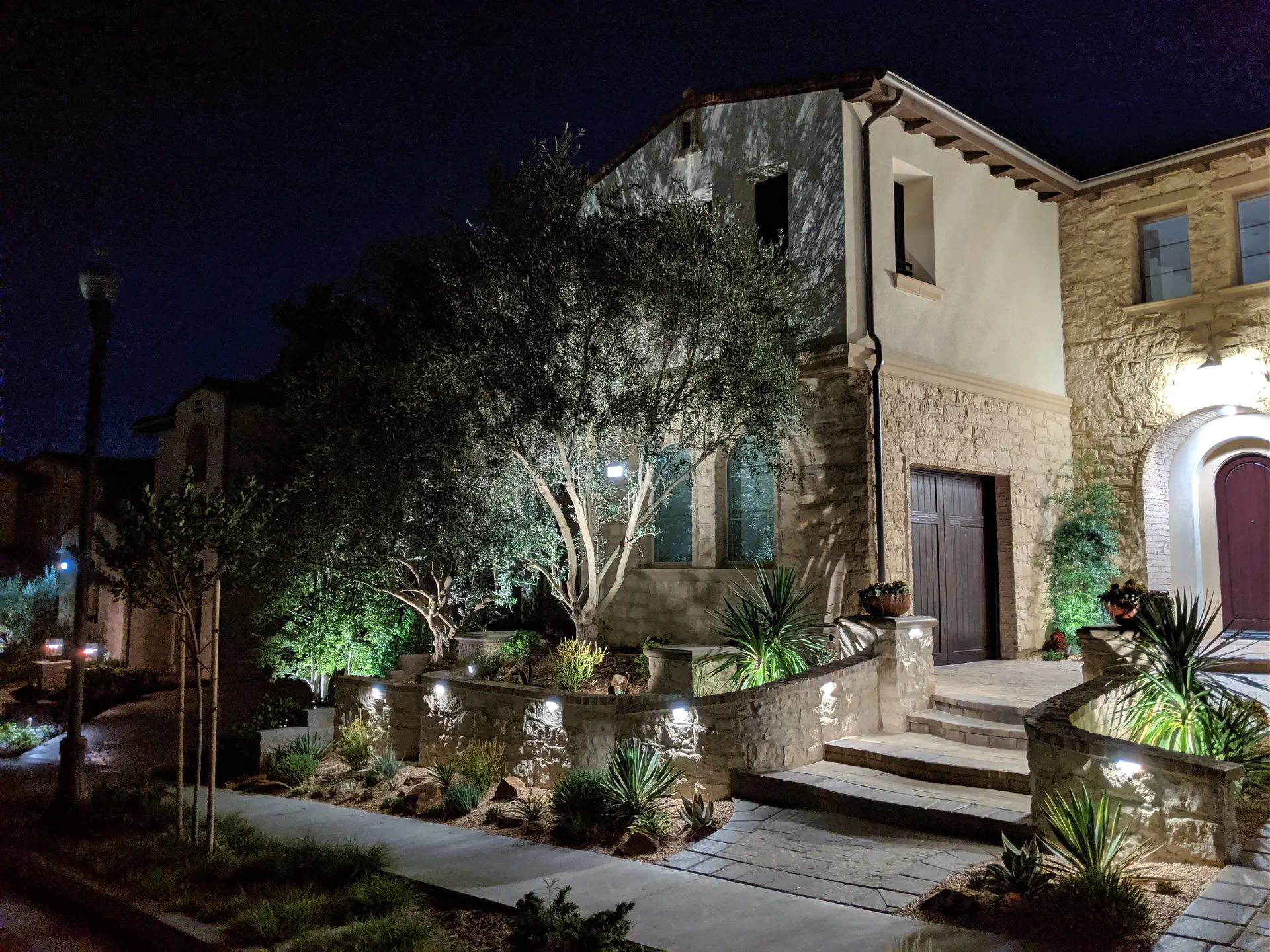
Deck and step lighting is one layer of a full landscape design. It works best alongside pathway and garden lighting that carries you from the driveway to the deck, uplighting on the trees around it, and, if you have one, the pool and patio lighting beyond it. The whole thing is landscape lighting, designed as one scene so the light flows from space to space instead of stopping at the deck edge.
What it costs
Every deck and stairway is different, so pricing tracks how many steps and how much structure you want lit, and how the light ties into the rest of the yard. We measure it, design it, and hand you one flat written price at no cost, with financing available. You can see how we approach pricing first.
Common questions
Can you add step lighting to a deck that is already built? Usually, yes. Low-voltage lighting can often be run into an existing deck, stairway, or hardscape without rebuilding it. We look at how the structure is put together and route the wiring cleanly, and we will tell you honestly if a particular spot is not workable.
Will the fixtures hold up outdoors in Florida? Yes, when they are the right ones. We use sealed, low-voltage fixtures rated for wet locations and built for the heat, humidity, and storms here, not the adhesive or solar step lights that fade and fail within a season.
Is it mainly for looks or for safety? Both, and that is the point. The same warm light that makes a deck feel like an outdoor room is what makes every step visible, so no one is guessing at an edge in the dark.
If your deck or steps disappear at sunset, that is a fixable problem. Start with a free design consultation and we will show you what the space could look like, and feel like, after dark.

Want this on your home?
Book a free design consultation. We will walk your property, design the look around your rooflines, and hand you a clear written quote with no obligation.