
Comparing permanent lighting systems
RGB vs RGBW: Why Some Warm White Looks Blue
Every brand in this category says their system does warm white. They do not all make it the same way, and on the setting you will actually use most nights, the difference is visible.
The setting you will actually use
People buy permanent lighting for the color. They live with it in white.
This is the single most useful thing to understand before you compare quotes. The color is what sells the system, and it is genuinely great to have in December and on a Saturday in the fall. But once the novelty settles, the overwhelming majority of nights are plain warm white, because a house traced in warm white simply looks finished.
Which means the quality of the white is not a detail. It is the thing you are buying. And it is the spec most likely to be glossed over in a sales conversation, because a headline about millions of colors is easier to sell than an explanation of how one of them is made.
How each brand makes white
| System | What their own documentation says | What that means |
|---|---|---|
| Gemstone | Their FAQ states RGBWW bulbs, where WW is a dedicated warm white diode. Stated range 2800K warm white to 7000K daylight. | A separate white diode. Same approach we install. |
| JellyFish | Their site states 16 million colors "including warm white", and lists warm white presets at 2700K, 3000K, 3500K, 4000K and 5000K. | They publish color temperatures, but we could not find any statement of whether there is a separate white diode. Ask them directly. |
| Trimlight | Asked directly what type of white Trimlight has, their FAQ answers: "With RGB lights pure white is using a combination of red, green and blue to create the color." Warm white is "a warm white preset on the custom color palette screen". | Their own FAQ says white is made by combining red, green and blue. The words RGBW and RGBWW do not appear anywhere on it. |
| Architectural Ambiance | RGBW. The fourth diode is dedicated to warm white and is a physically separate emitter from the red, green and blue. | A separate white diode. |
Competitor rows quoted from their own published pages: gemstonelights.com/pages/faq , jellyfishlighting.com , trimlight.com/faq All checked August 7, 2026. Terms and specifications change, so verify before you decide. Gemstone Lights, JellyFish Lighting and Trimlight are trademarks of their respective owners and are named here only to identify the products being compared.
What the fourth diode actually is
An RGB bulb holds three emitters: red, green and blue. Drive all three and you get white, the same way three colored stage lights overlap into white. It works, and for saturated color it works well.
An RGBW bulb holds a fourth emitter that is manufactured to produce warm white on its own. When you set the system to white, that diode does the work rather than three colors being blended into an approximation. That is the whole difference, and it is why two systems can both truthfully advertise warm white and not look the same on your stucco.
Gemstone calls theirs RGBWW and publishes the range. We use RGBW. On this specific question the two are equivalent, and any company telling you their permanent lighting is categorically better than Gemstone's on color quality should be asked to show you where that is documented.
Where it does separate is against a pure RGB system. Trimlight's FAQ asks and answers this one directly. Under the question of what type of white Trimlight has, the answer begins: "With RGB lights pure white is using a combination of red, green and blue to create the color." Warm white is described as a preset on the app's color palette. That is their document, not our characterization, and the terms RGBW and RGBWW do not appear on it.
JellyFish sits somewhere in between on the published evidence. They list warm white presets at named color temperatures from 2700K up, which is more specific than most, but we could not find any statement about diode architecture on their site either way. We are not going to guess at it. If warm white quality is what decides your purchase, ask each company the same direct question and compare the answers.
The test that settles it
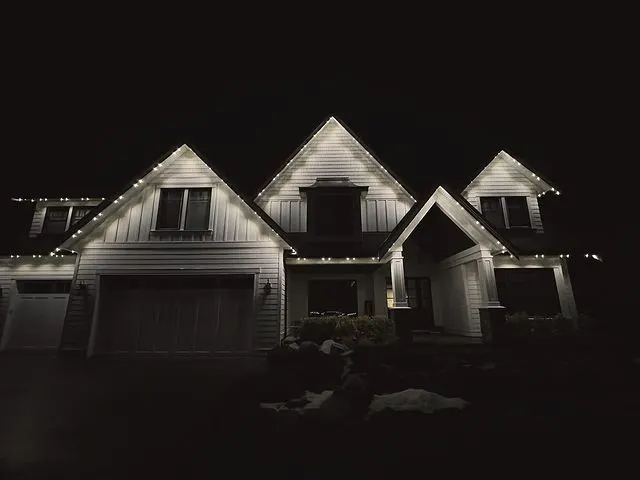
Ignore the brochures and do this instead. Ask every company quoting you to show you their system running plain warm white, on an actual house, after dark. Not a rendering, not a product shot, not the color demo.
The color demo is the easy part. Every system in this category passes it, and every salesperson knows it.
Warm white is the hard one, and Florida makes it harder. Half the houses around Trinity and Starkey Ranch are cream or sand stucco under a tan barrel-tile roof, and warm materials are exactly where a cool white gives itself away. A white that looked fine on a gray house in a catalog can go faintly blue on your stucco, next to your porch light, with the neighbor's warm bulbs forty feet away for comparison. You do not need to know what a diode is to see it. You just need to be standing in the driveway after dark.
If a company cannot show you that, it is worth asking why. What we install is on the permanent architectural lighting page, and if you want the rest of the comparison, start at the brand comparison hub.
Questions people ask
What is actually wrong with white mixed from RGB?
Nothing, if you only ever want color. The problem shows up on the setting almost everyone actually uses, which is plain white every ordinary night. Red, green and blue at full output do make something the eye reads as white, but it is a thin, slightly clinical white, and against warm materials like stucco, stone and wood it tends to read cool or faintly blue. A dedicated warm white diode is built to emit warm white directly, so it lands closer to the incandescent tone people picture when they say "warm".
How do I tell which one a company is selling me?
Ask one question: is there a separate white diode in the bulb, or is white mixed from red, green and blue? A company selling a four-diode system will answer immediately, because it is the thing they are proud of. If the answer is vague, ask to see it lit in white after dark, on a house, not in a showroom or a photo.
Is your system better than Gemstone on this?
No. Gemstone's own FAQ states RGBWW with a dedicated warm white diode, which is the same architecture we install, and we are not going to tell you otherwise to win a sale. On this specific point the two systems are equivalent. Source: https://www.gemstonelights.com/pages/faq, checked August 7, 2026.
Does the color temperature number matter?
Some. Lower numbers are warmer. Around 2700K is close to an old incandescent bulb, 3000K is a common warm white, and by 5000K you are into a cool daylight look that most people do not want on a house. What matters more than the number is whether the system reaches it with a real white emitter or approximates it, because two systems can both claim "warm white" and look noticeably different on the same wall.
Can I see the difference in person?
Yes, and you should. Any permanent lighting worth buying looks better on a house at night than it does in any photograph, including ours. We will show you warm white on a real roofline. Call (727) 222-3111.
See it in warm white first
We will walk your roofline, show you what warm white looks like on a house like yours, and give you one written price. Free, and no obligation either way.