
After Dark Guide
Facade and Wall Washing: Lighting the Front of Your Home
Uplighting the face of a home turns stucco, stone, and columns into the feature after dark. Here is washing versus grazing, and when to use each one.
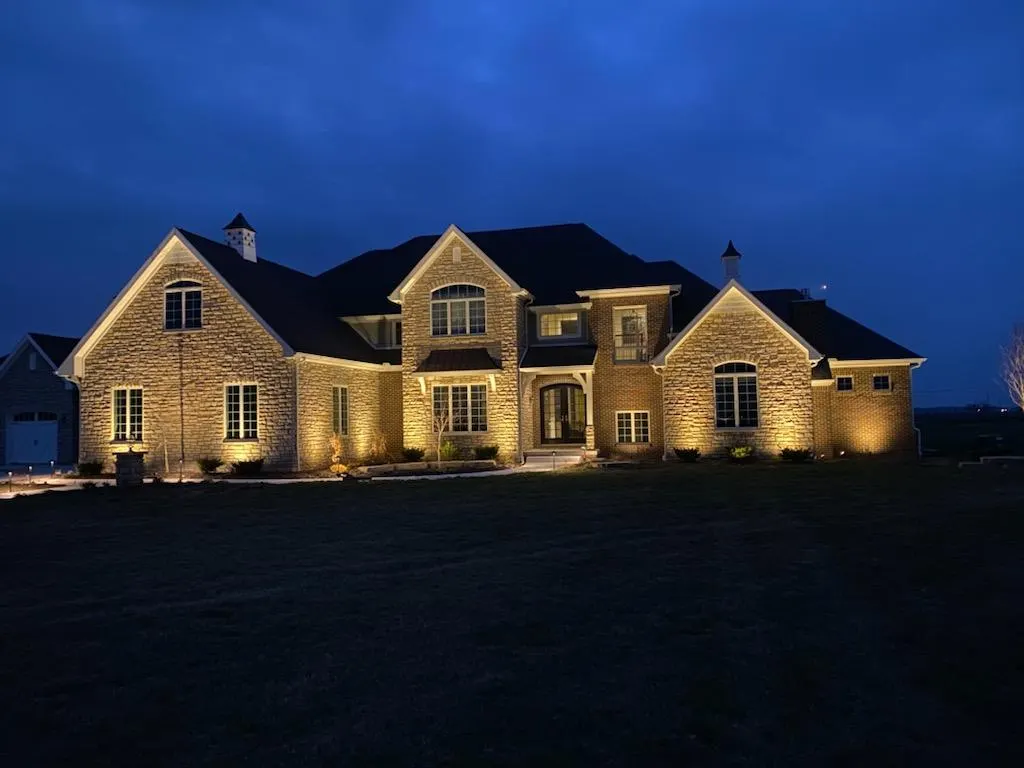
You chose the stucco, the stone, the columns, the arches. During the day they earn the curb appeal. At night the whole front of the house goes dark and none of it reads. Facade lighting is how you get those features back after sunset, and on the stone-and-stucco homes across Tampa Bay it is one of the highest-impact things you can light.
Washing versus grazing
There are two ways to light a wall, and knowing the difference is most of the design.
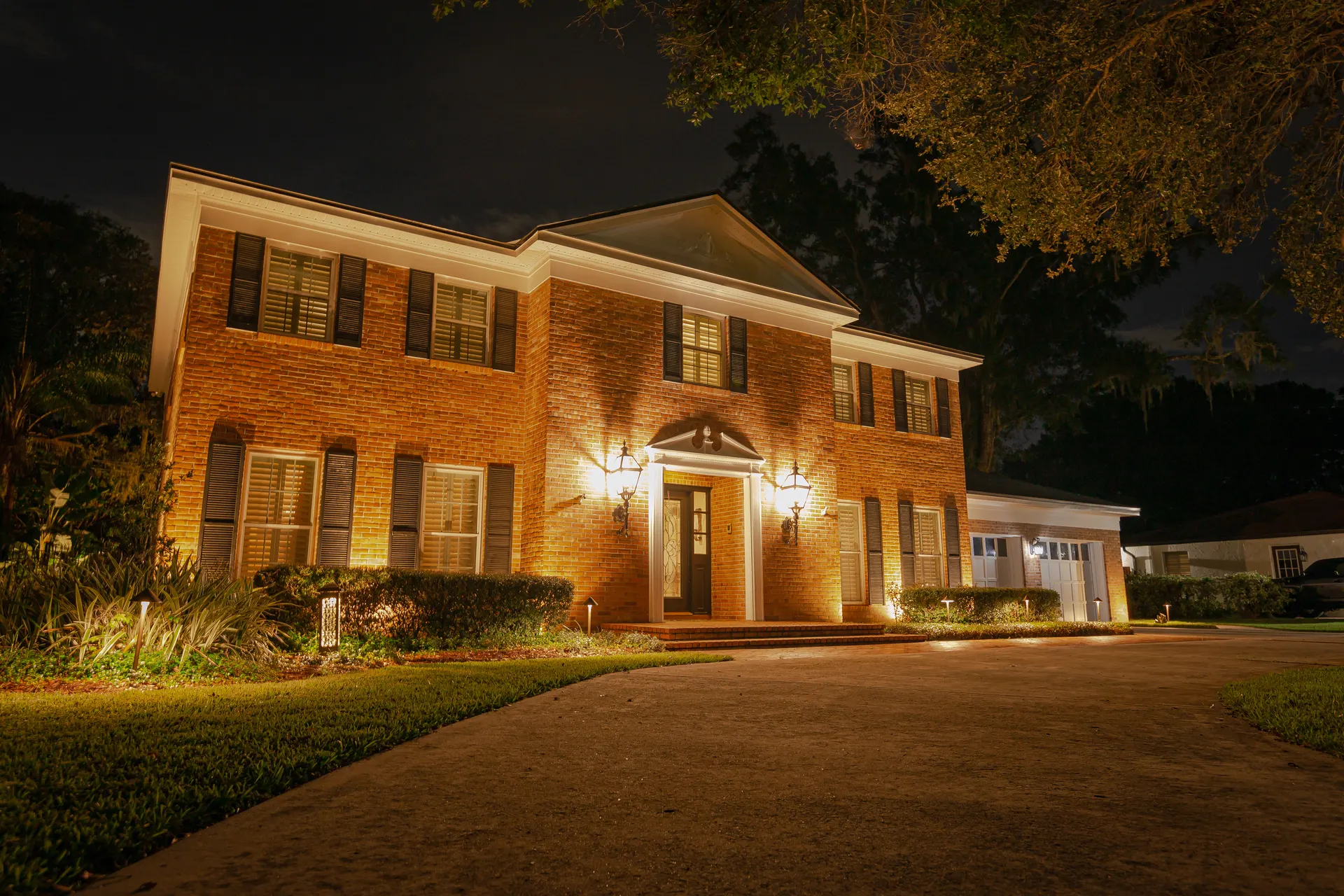
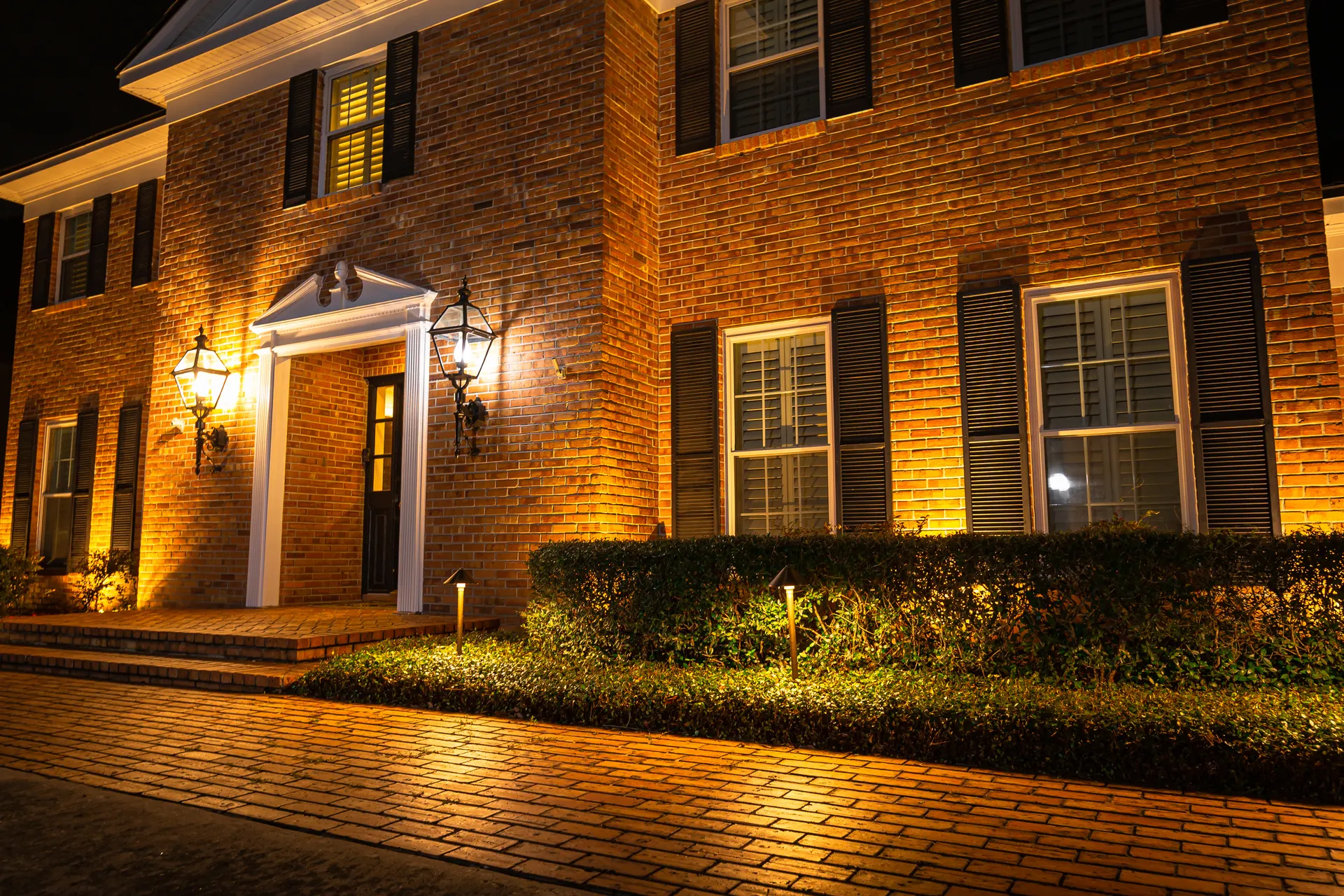
Wall washing means placing fixtures far enough out from the wall that the light spreads into a soft, even glow across the whole surface. It flatters flat stucco and gives you that smooth, uplit face you see on the nicer homes at dusk. Grazing is the opposite: fixtures set close to the wall and aimed steeply up, so the light skims the surface and throws shadow into every joint and texture. On stacked stone, brick, or a columned entry, grazing is what makes the texture pop. A good facade design uses both, washing the smooth sections and grazing the textured ones. You can see the range on our Landscape Lighting page.
Columns, arches, and entries
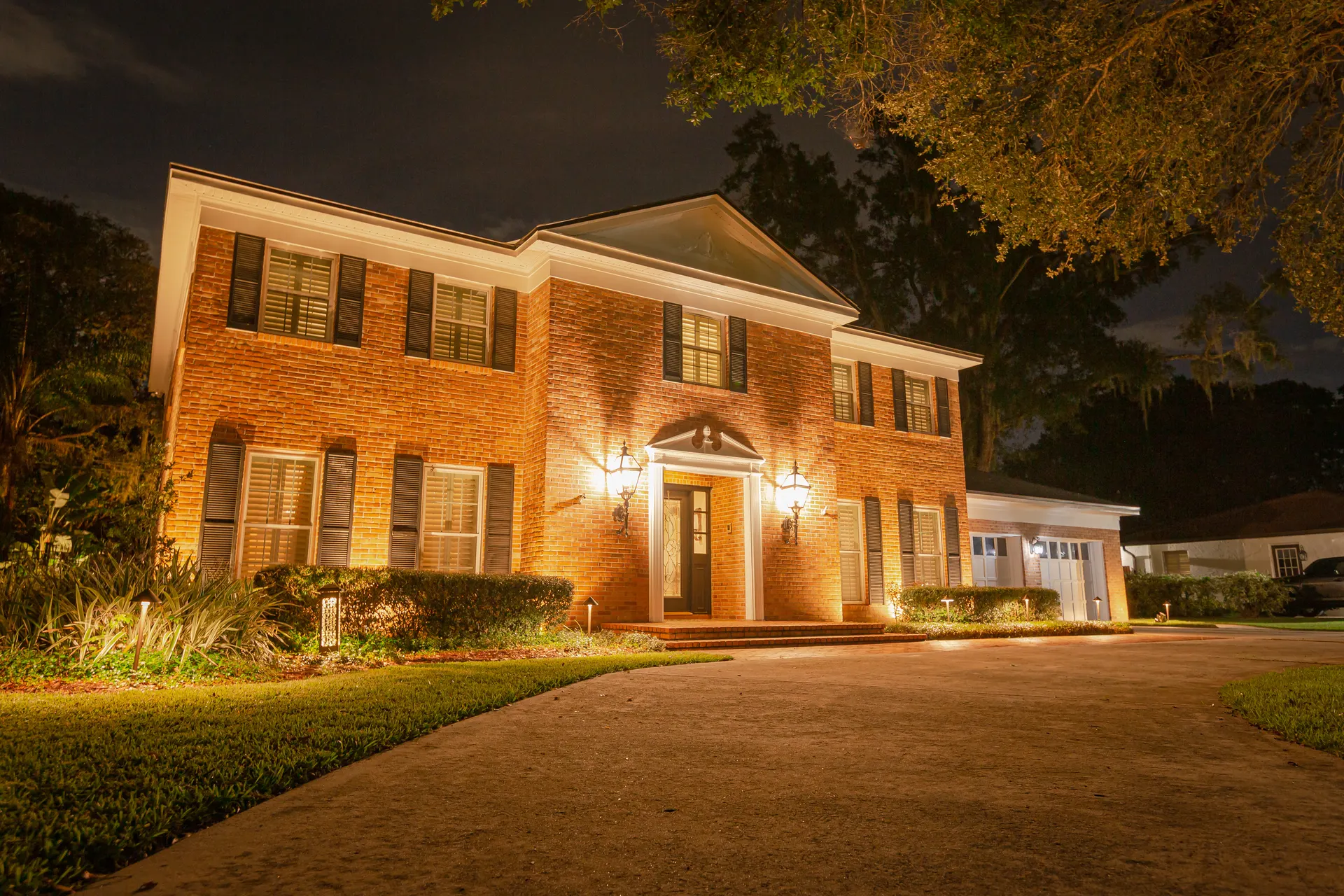
The front entry is where facade lighting earns its keep. Stone columns want a fixture at the base of each, grazing up to show the stacked joints. An arched entry takes a soft wash to fill it without glare in your guests’ eyes. The goal is to lead the eye to the door and make the approach feel welcoming instead of a dark walk up shadowed steps. It is warm-white light, on a timer, so the front of the house lights itself every evening.
Two ways to light a facade
Most facade lighting is landscape uplighting, fixtures in the beds aimed up the wall, which is flexible and works on almost any home. On homes with the right rooflines, our permanent architectural lighting can also trace the top edge of the facade in a crisp warm-white line, which reads as a clean architectural outline rather than an uplit wash. The two work together: the track outlines the roofline, the landscape fixtures light the wall and columns below. At a walk-through we will tell you honestly which approach, or which mix, fits your home.
Built for stucco and stone in this climate
Facade fixtures sit tight to the house in the beds, through the heat, the humidity, and the afternoon storms, so they have to be low-voltage components rated for it and run cleanly against the wall. That is the same install discipline behind more than 25 years of low-voltage experience. If you want to see how facade lighting works with lit trees and a lit path, the landscape uplighting and palm and oak tree uplighting guides pair with this one.
See your own facade lit before you decide. Book a free design consultation and we will show you after dark, with a written quote and no obligation, or call (727) 222-3111.
Common questions
Will the light shine in my windows? No, not when it is aimed right. Fixtures are positioned and angled to skim or wash the wall, not to throw glare into windows or a guest’s eyes. Aiming is part of the design.
Does wall washing work on a two-story home? Yes, though a taller wall needs fixtures with the right output and beam to carry the light up evenly. We size the fixtures to the height of the wall so the top does not fall dark.
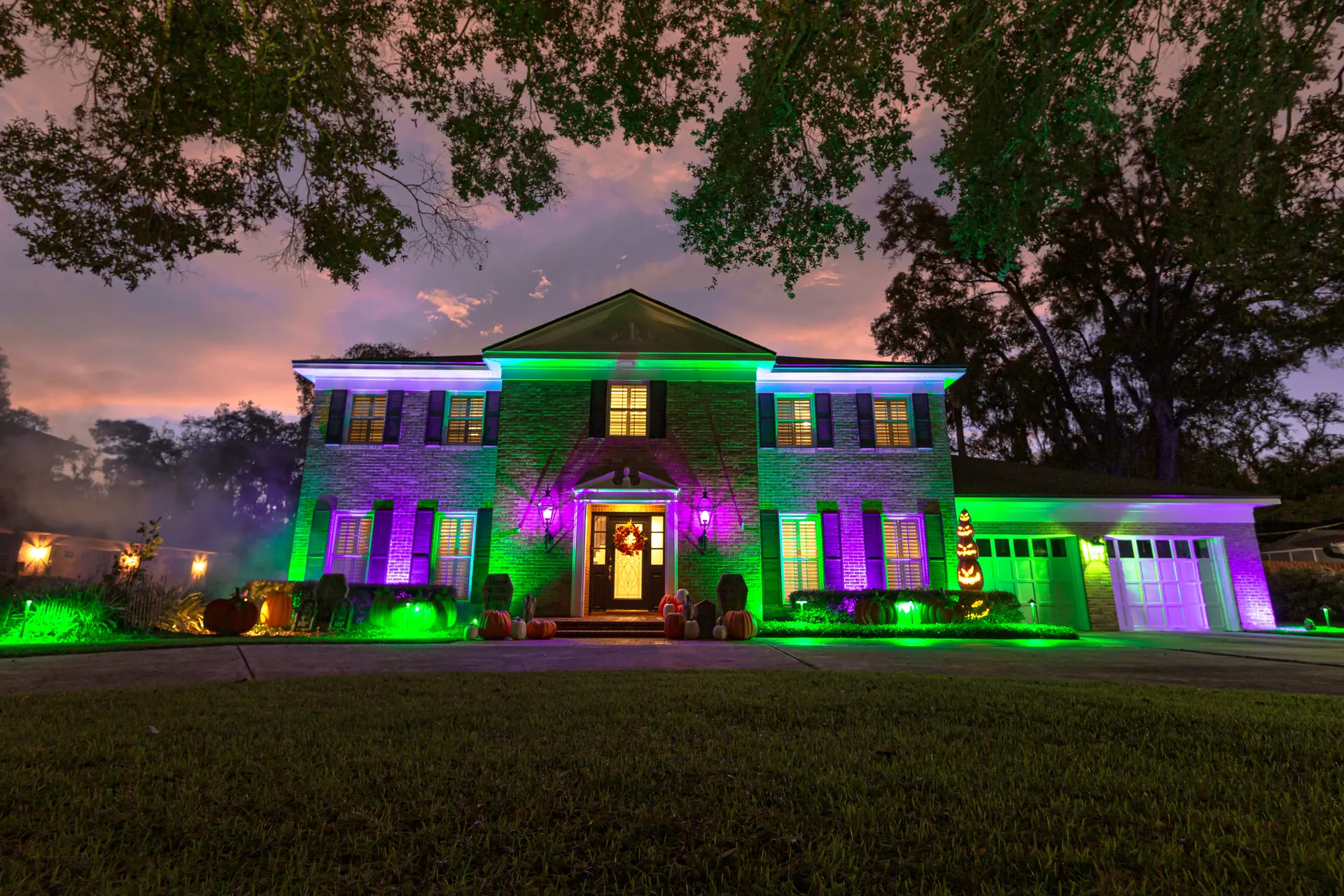
Can facade lighting change colors for holidays? Landscape facade lighting is warm white on a timer. If you want color on the top edge of the house for holidays, that is the permanent roofline system, which can outline the facade and switch colors from an app.
Want this on your home?
Book a free design consultation. We will walk your property, design the look around your rooflines, and hand you a clear written quote with no obligation.