
After Dark Guide
Palm and Oak Tree Uplighting for Florida Yards
Nothing changes a Tampa Bay yard after dark like a lit palm or a grand oak. Here is how tree uplighting works, and what the right fixtures do for Florida trees.
The trees are usually the best thing in a Florida yard, and after sunset they vanish. A tall palm, a spreading live oak, the specimen you paid good money for at the nursery, all of it goes flat and dark the moment the sun drops. Tree uplighting is the fix, and on the palms and oaks around Tampa Bay it is the single change that does the most.
What tree uplighting actually is
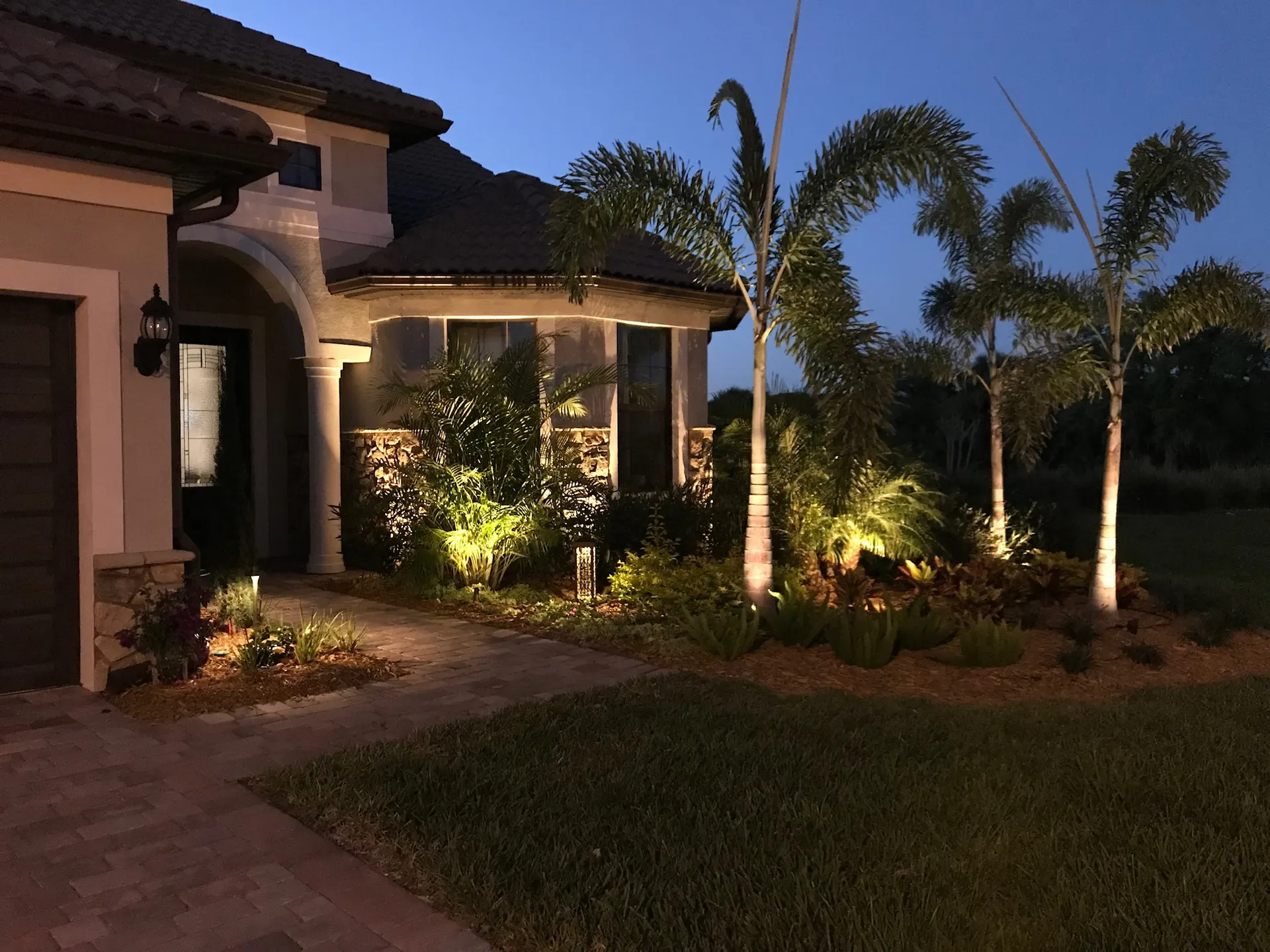
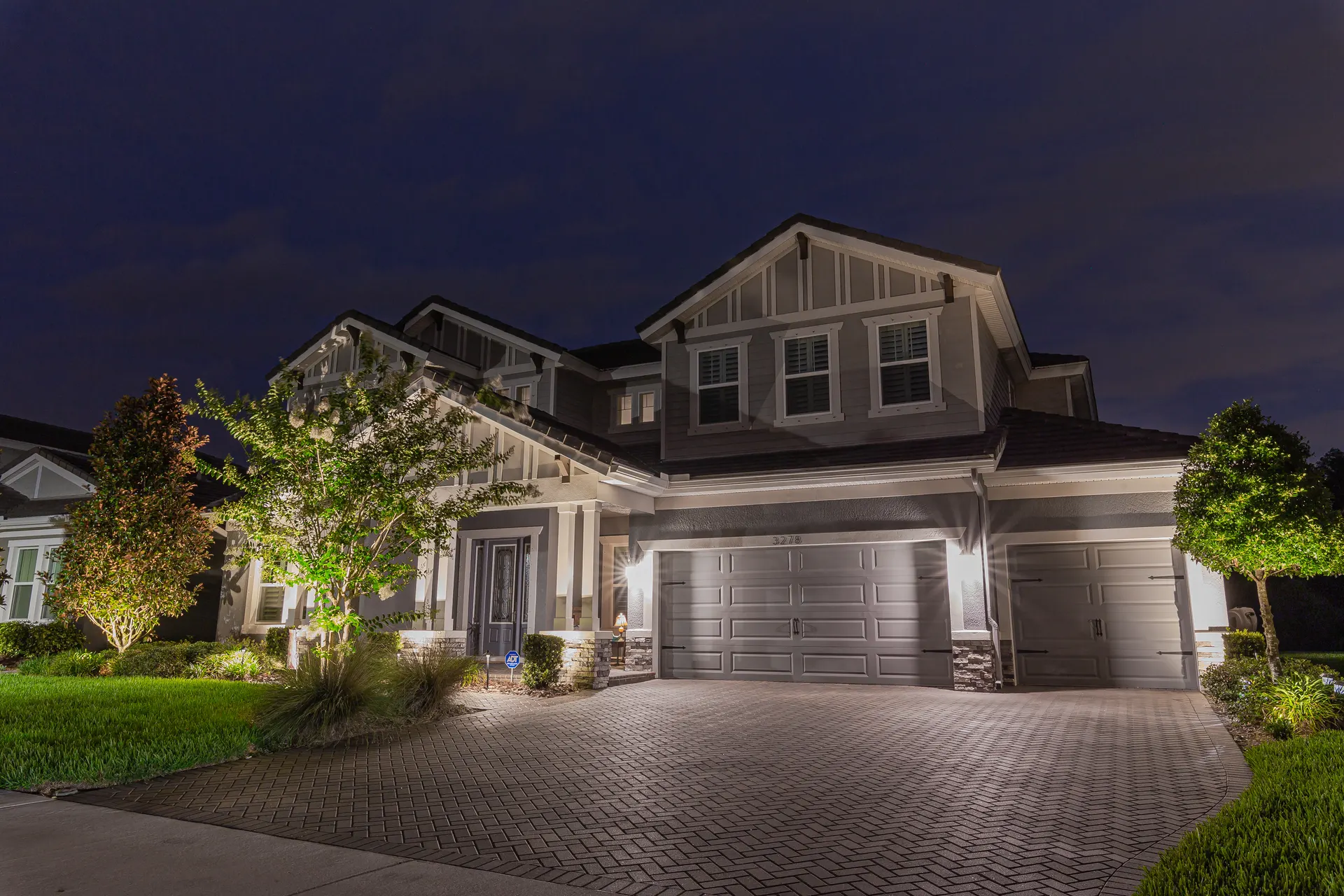
Uplighting means a fixture set at or near the base of the tree, aimed up the trunk and into the canopy. Done right, it turns the tree into a sculpture at night: the trunk glows, the fronds or branches catch the light overhead, and the whole thing reads as a centerpiece instead of a black shape. We run these on warm-white landscape fixtures, on a timer, so the yard lights itself at dusk and shuts off on its own. You can see the full range on our Landscape Lighting page.
To be clear on one thing up front: landscape lighting is warm white, not color-changing. The color-from-an-app feature belongs to our permanent roofline system, not to tree and yard lighting. Uplighting a palm is about drama and warmth, not disco.
Palms and oaks want different light
The two trees that define a Tampa Bay yard take light differently, and a good design treats them differently.
A palm is all vertical. One or two fixtures at the base, aimed straight up the trunk, run the light up to the crown and light the fronds from below, which is a striking, clean look on a sabal or a queen palm. A live oak is the opposite: wide, layered, and full of texture. It wants a few fixtures spread around the base and angled to wash up into the canopy so the light finds the branches without blowing out. Matching the fixtures and angles to the tree is the difference between a professional result and a spotlight in the mulch.
Built for the Florida yard
Landscape lighting down here lives in wet beds, sandy soil, and afternoon storms, so the components have to be built for it. We use low-voltage fixtures and weather-rated connections meant for Florida heat and humidity, run cleanly so there is nothing to trip over or mow into. It is the same low-voltage discipline behind more than 25 years of install experience, and it is why a system holds up through the summer instead of flickering out after the first wet month. If you want to see how uplighting works alongside path and bed lighting, the landscape uplighting and pathway and garden lighting guides go deeper.
The best way to picture it is to see your own trees lit. Book a free design consultation and we will walk the yard after dark and show you, with a written quote and no obligation, or call (727) 222-3111.
Common questions
Will uplighting hurt the tree? No. The fixtures sit at or near the base and do not touch or bind the tree, and LED fixtures run cool. As a palm or oak grows, fixtures can be adjusted or moved to keep the aim right.
Can I change the color of the tree lights? Landscape uplighting is warm white and stays warm white. Timers come standard so it lights at dusk on its own, and app control is available as an option, but the light is warm white by design and does not change colors. Color on demand is a feature of our permanent roofline system instead.
How many fixtures does one tree need? It depends on the tree. A single palm might take one or two fixtures up the trunk, while a broad live oak often wants three or more spread around the base to fill the canopy. We size it to the tree at the design walk-through.
Want this on your home?
Book a free design consultation. We will walk your property, design the look around your rooflines, and hand you a clear written quote with no obligation.