
After Dark Guide
Your House Looks Dark and Flat After Sunset? Here's the Fix
Some homes vanish into a dark mass the moment the sun goes down. The fix is not one big floodlight, it is lighting the home in layers.
You pull into the driveway after dark and your house is just a shape against the sky. Three doors down a neighbor’s place looks warm and finished, the columns lit, the palms glowing, the rooflines crisp. Same street, maybe the same builder, and yet one home reads after sunset and the other disappears. The difference is not what the house cost. It is whether anyone ever lit it.
Why one light makes it worse, not better
The instinct is to throw more light at the problem: a brighter porch fixture, a floodlight on the corner of the garage. It rarely helps. A single bright source flattens everything it touches. The wall it points at goes harsh and washed-out, every surface it misses falls into deep shadow, and the house ends up looking like a flat cutout with one hot spot stuck to it. That lone fixture also creates glare, so your eyes lock onto the bulb and everything around it reads darker by comparison.
A dark house is not a brightness problem. It is a shape problem. After sunset a home loses the dimension daylight gives it for free: the roofline, the depth of the entry, the texture of the stone, the height of the palms, all of it goes flat. The fix is not one big light. It is several small ones, placed to give those features back their shape.
The real fix: light the home in layers
We light a home in three layers, top to bottom, so the eye reads the whole structure instead of one bright patch.
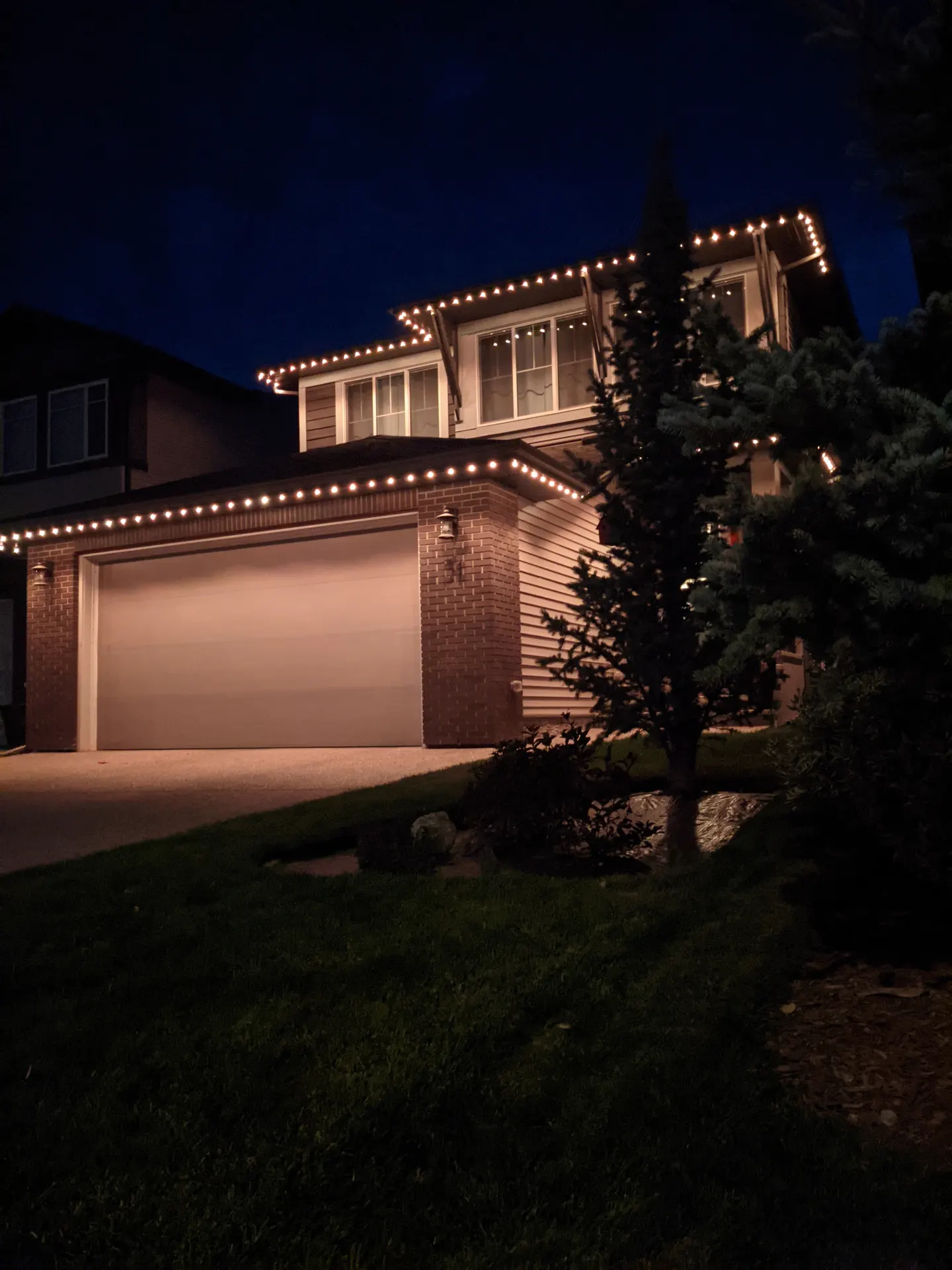
Up high is the architectural layer. A slim, color-matched track follows the roofline and the strong lines of the facade with the LEDs tucked inside it. By day the track is invisible. After dark it traces the edges of the home in a clean, even glow, so the silhouette reads against the night sky instead of melting into it. This is our Permanent Architectural Lighting, and it does the most to make a house look finished.
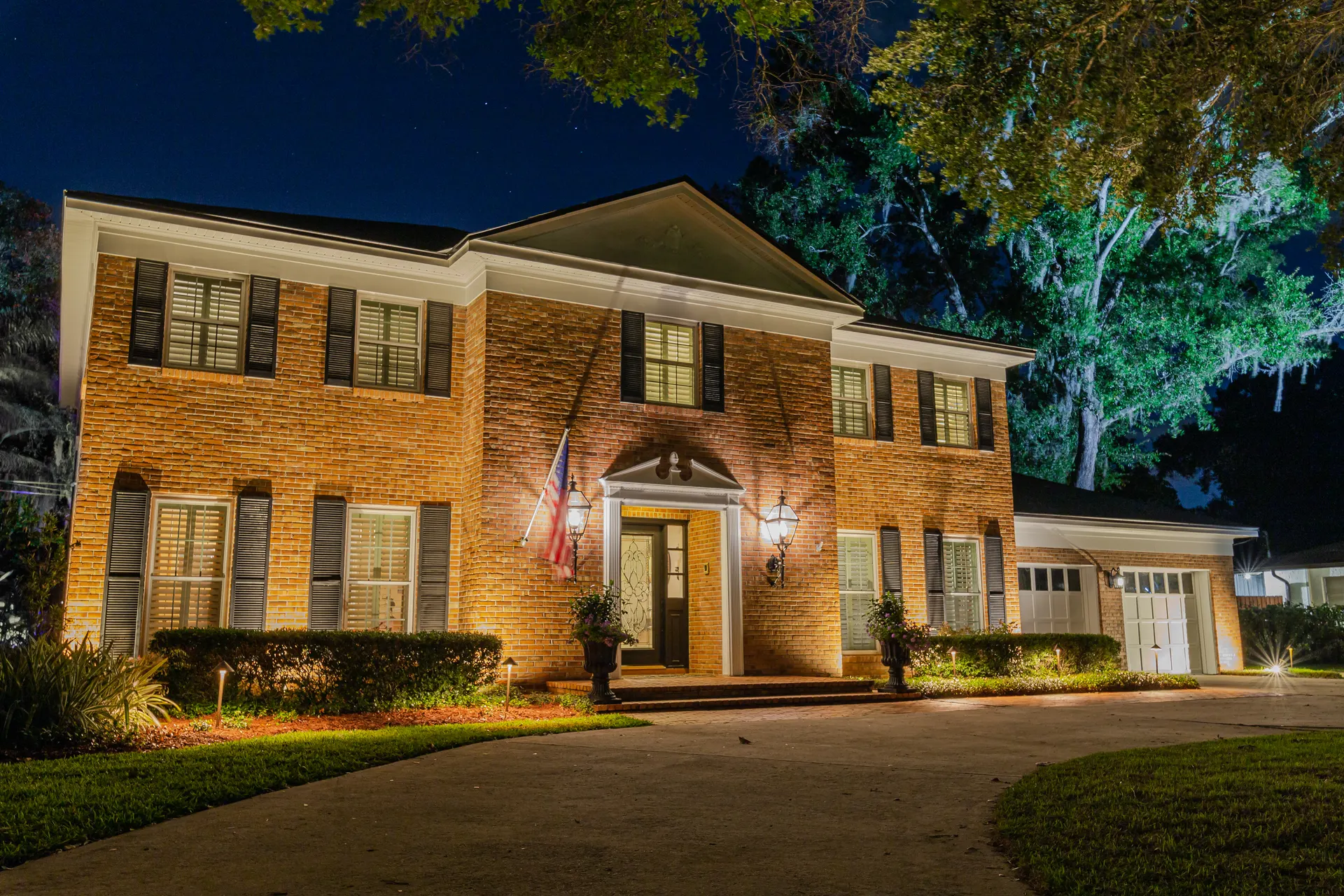
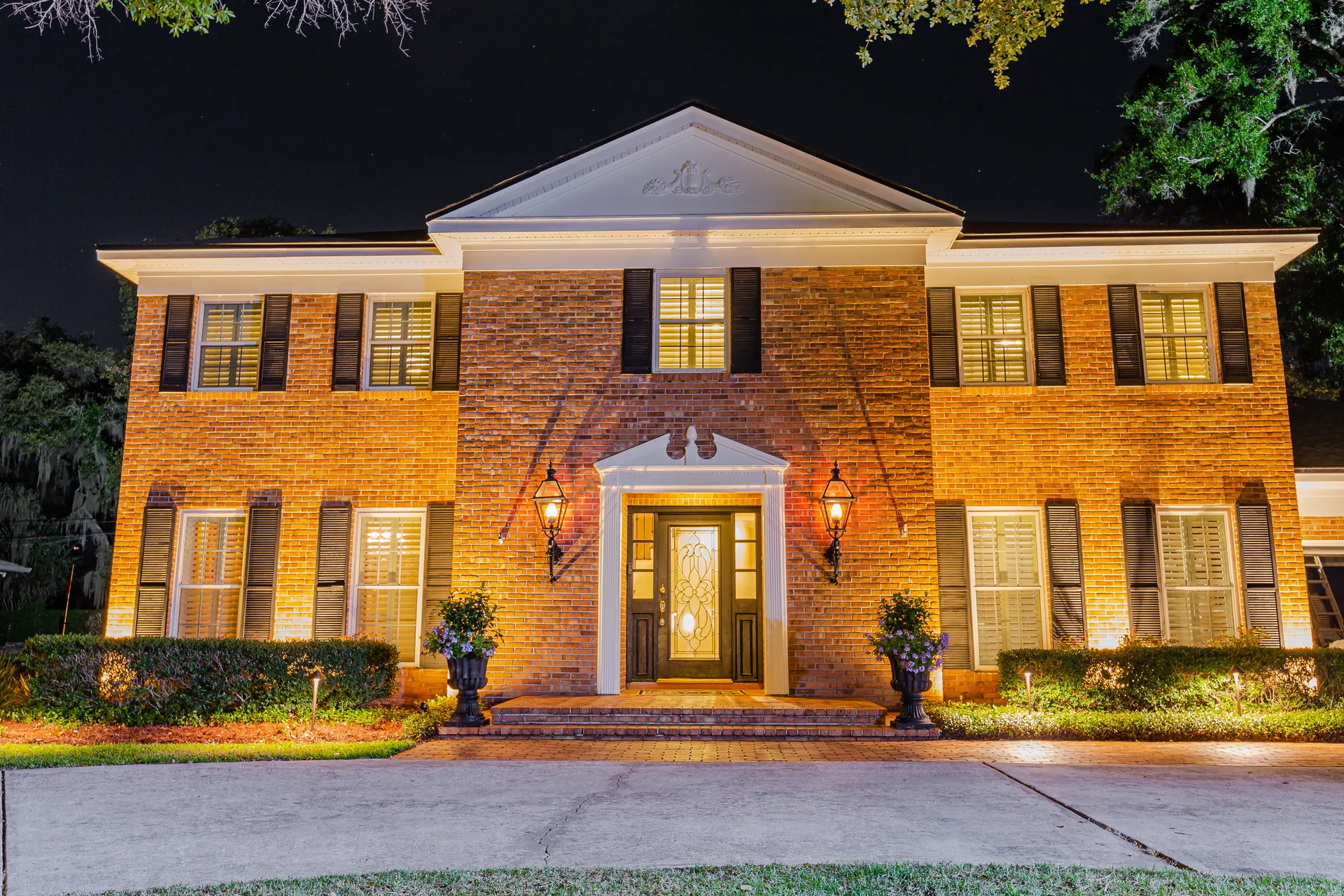
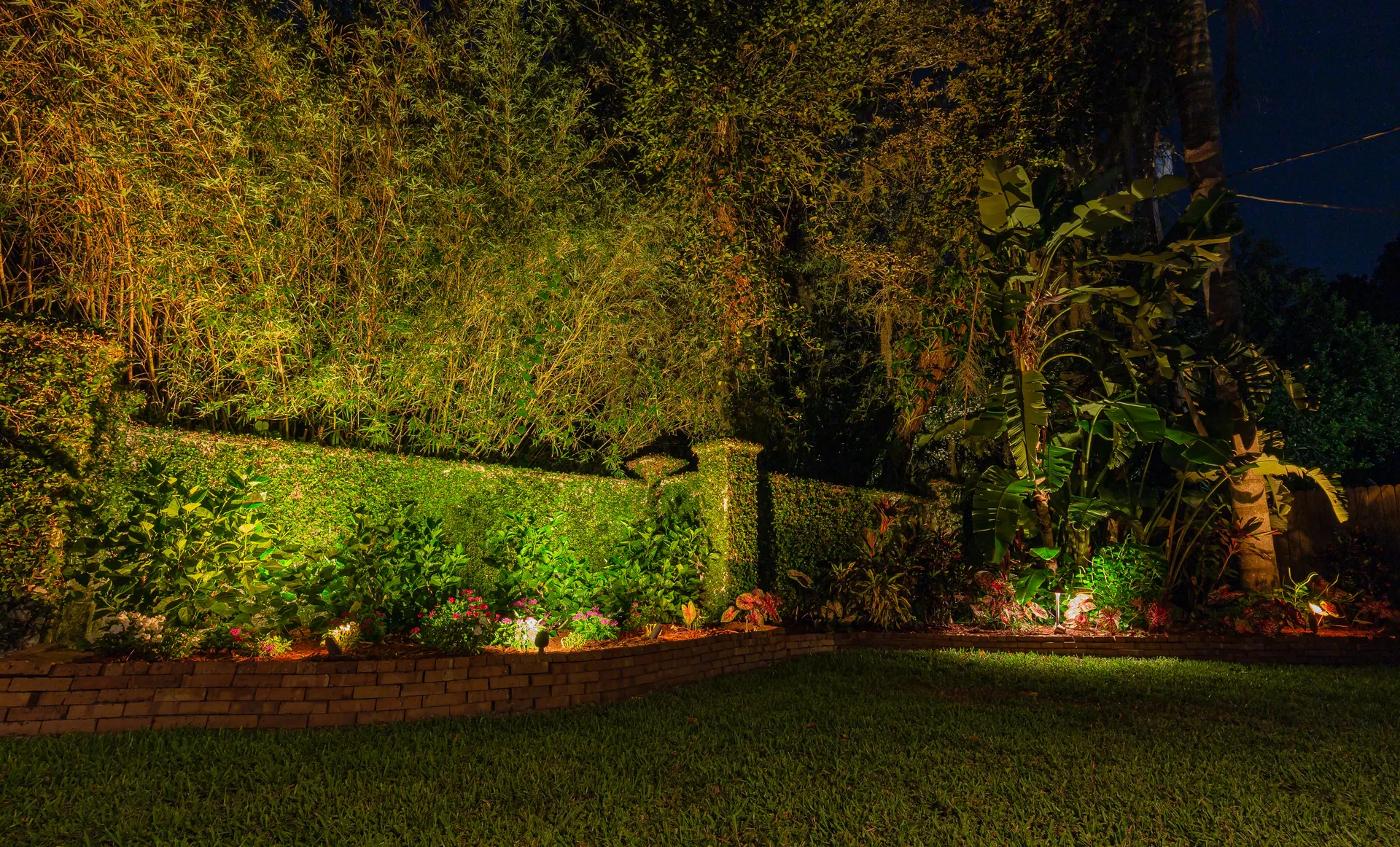
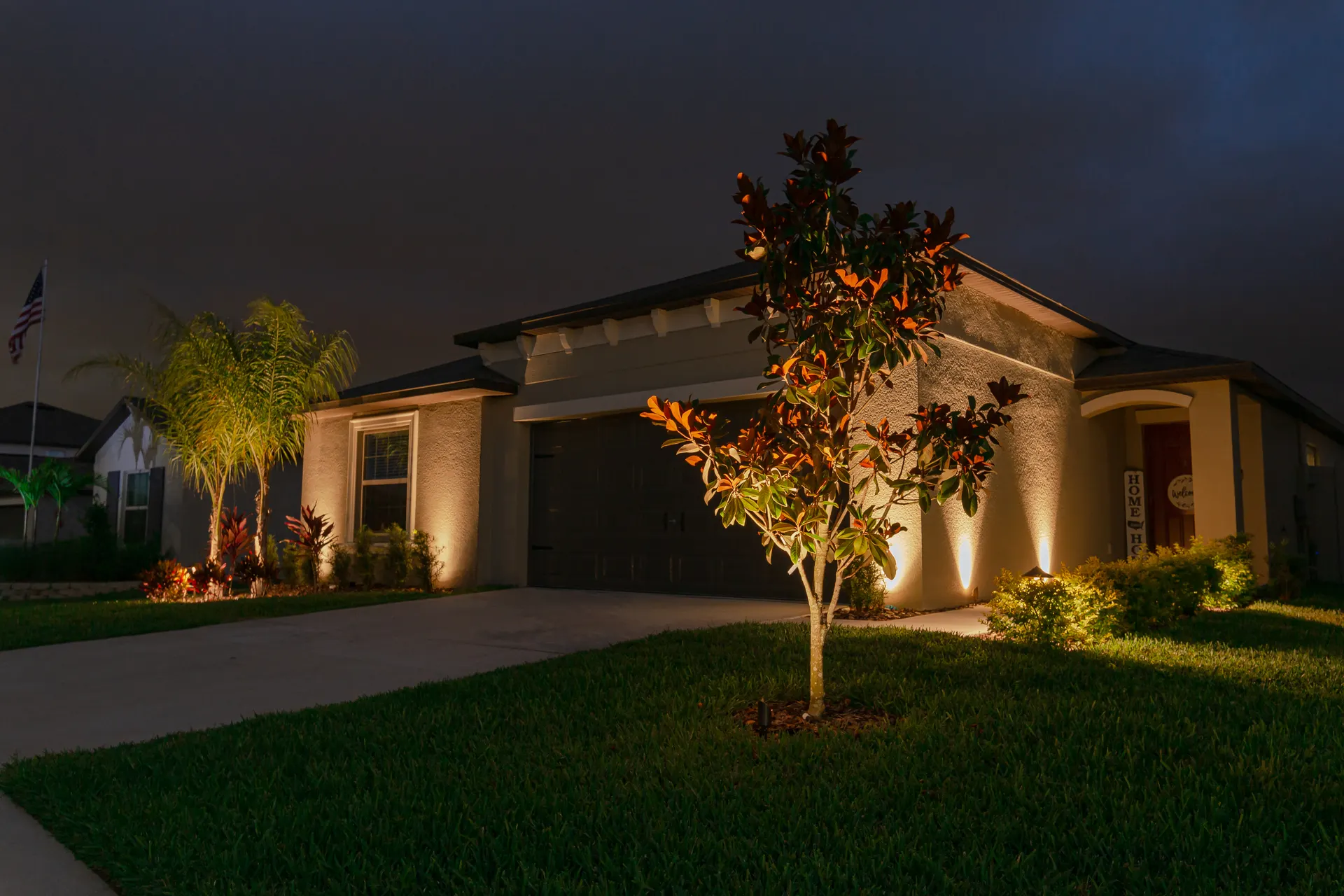
In the middle is the landscape layer. Uplights at the base of the palms send light up the trunks and into the canopy, so the trees stop being black shapes. The same fixtures graze the columns, the entry, and the front of the house, raking across stone, brick, or stucco so the texture comes alive. This is Landscape Lighting, and it adds the depth roofline light alone cannot.
At ground level is the path layer. Soft, low fixtures wash the walkway and the steps, not to be bright but to be welcoming, pulling the eye toward the front door. Together the three layers do what one floodlight never can: they give the house back its dimension.
Why warm white is the detail that sells it
The color matters as much as where the light lands. Many consumer kits make warm white by blending red, green, and blue diodes, and the result reads slightly blue and cold on the front of a house. The architectural track above uses RGBW LEDs with a fourth diode dedicated to warm white, so when you want that soft, incandescent tone on the roofline, you get the real thing. That is the color that makes stone look rich, brick look deep, and stucco look expensive after dark. You can still shift that architectural layer to color for a holiday or a game day from the app, while the landscape and path lights hold a steady warm glow.
The payoff is not only the look. A home with lit entries, a lit landscape, and a lit perimeter has fewer dark corners, so the same lighting that makes it beautiful makes the property safer and more secure.
What it costs and how to start
Every home is different, so we do not quote a layered system off a price sheet. We come out, walk the property after dark when we can, and design the layers around your roofline, your trees, and your entry. The track is hidden, the system is hardwired low-voltage, and it all runs from an app. We are family owned, licensed, insured, and certified, with more than 25 years in low-voltage work. See how we approach pricing, and financing is available if you would rather spread it out.
If your house disappears every night, start with a free design consultation. We will show you in writing what the layers would do for your home, with no obligation. Call (727) 222-3111.
Common questions
Why does adding a brighter floodlight make my house look worse? A single bright source flattens everything it hits and throws the rest into hard shadow, so the house reads as a flat cutout with one hot spot. Dimension comes from several small, placed lights, not one big one.
Will the equipment be visible during the day? No. The architectural track tucks into your fascia or soffit with the LEDs hidden inside, so it disappears in daylight. The landscape and path fixtures sit low and out of sightlines. By day you see your house. After dark you see it lit.
Can I light the whole house or do I have to start with one part? You can do as much or as little as you want. Many homeowners start with the roofline for the biggest visual change, then add landscape and path lighting. We design it so the layers work together now or build over time.
Want this on your home?
Book a free design consultation. We will walk your property, design the look around your rooflines, and hand you a clear written quote with no obligation.