
After Dark Guide
Do Permanent Lights Look Tacky? Here Is the Honest Answer
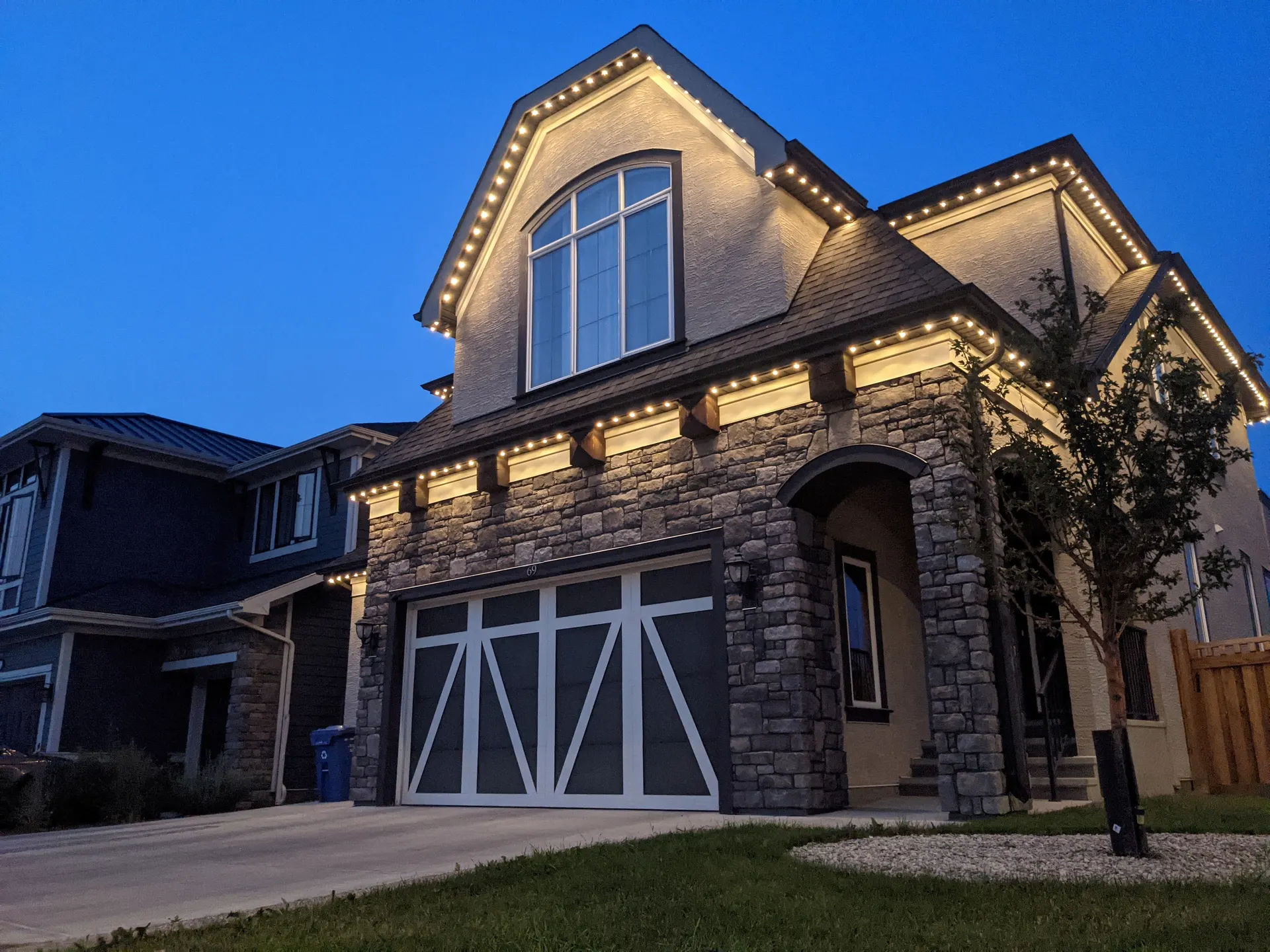
The fear is a house that looks like a Christmas display in July. Done right, a permanent system is the opposite: invisible by day, a clean warm line at night.
It is the number one hesitation we hear, and it is a reasonable one. Everybody has driven past the house that still has multicolor lights blinking away in March, and nobody wants to be that house. So let us answer it straight: a permanent system done right does not look tacky. Done wrong, anything can. The difference is in the details, so here they are.
Where the tacky reputation comes from
The bad reputation comes from cheap color-mixing strips, the kind that only know how to do saturated, buzzy color and a cold blue-white when they try to fake white. Left on year-round, that is exactly the look people are afraid of. If your only reference for permanent lighting is a Govee strip clipped to a gutter, of course it looks like a toy. That is not what a professionally installed architectural system is.
What a real system actually looks like
Two things separate a premium permanent system from a cheap strip, and both matter.
First, by day it disappears. The track is a slim channel color-matched to your soffit or fascia, so from the street you see trim, not a row of lights or a visible cord. You would have to know it was there. Our Permanent Architectural Lighting page shows how it tucks in.
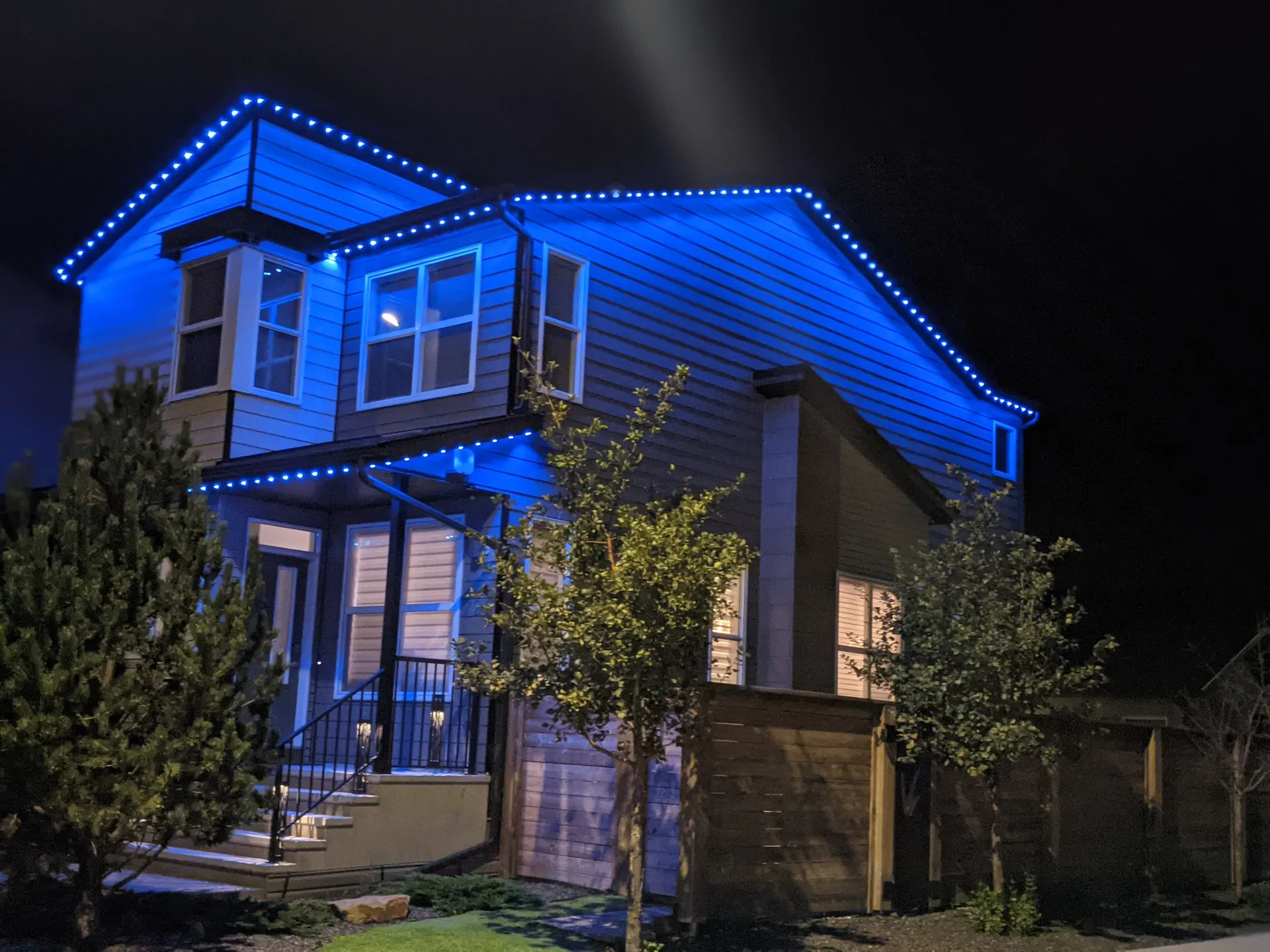
Second, at night the default is restraint. Most nights the system runs a soft, even warm white that traces the rooflines in one clean architectural line. The RGBW chips use a dedicated warm-white diode, so that everyday white is a genuine warm white, not the clinical blue-white of cheap strips. It reads less like a holiday display and more like the house just looks finished. On the stucco and tile homes across Tampa Bay, that clean line is what makes a house look considered rather than decorated.
Color is a choice, not a default
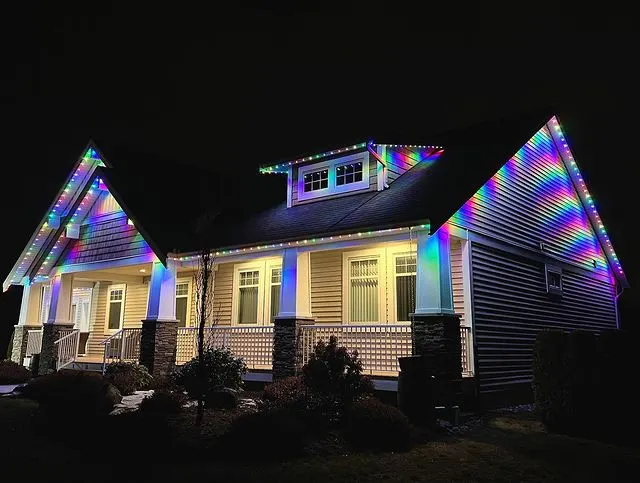
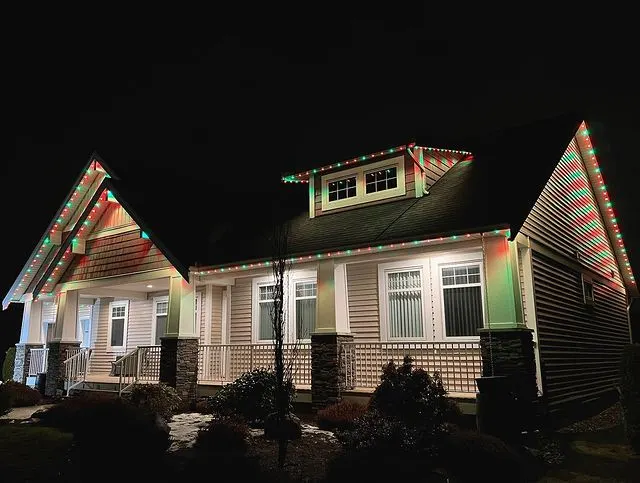
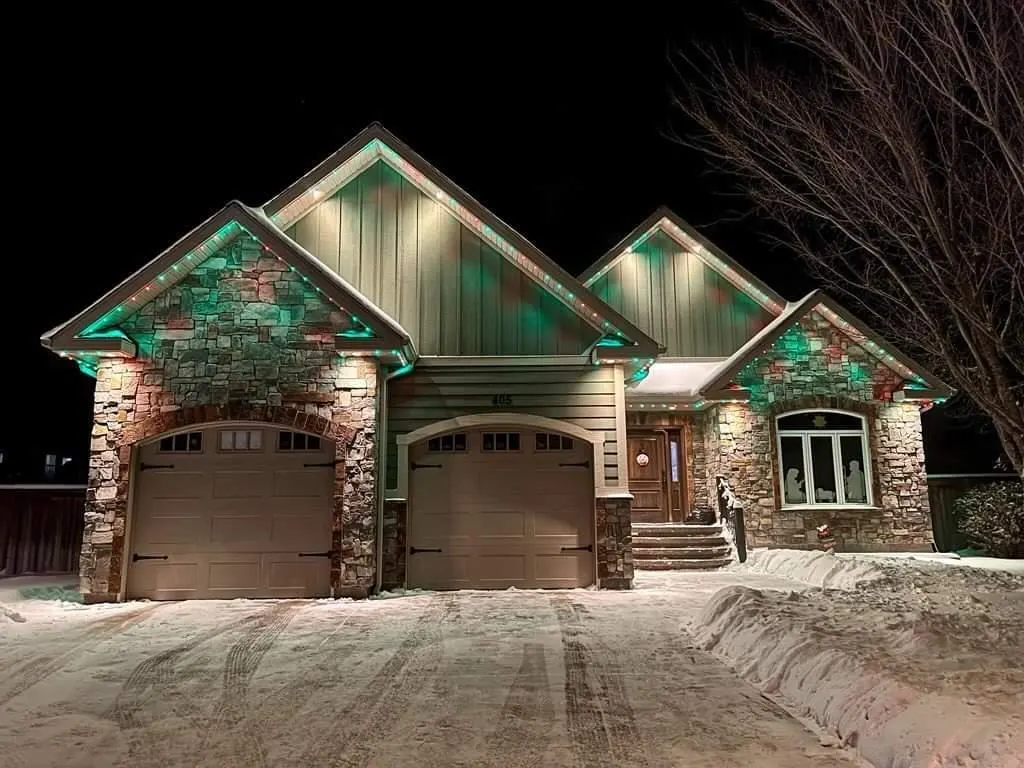
The full color is there when you want it, and only when you want it. Red and green for Christmas, orange for Halloween, red white and blue for the Fourth, your team’s colors on game day, all controlled by zone from an app. Then you turn it back to warm white and the house goes quiet again. The people whose homes look tacky are the ones who leave saturated color running year-round. With a real system, restraint is a setting, and taste is the whole point. If the color side is what interests you, the color-changing house lights guide goes deeper.
Taste is built in at the design stage
The other reason a professional install does not look tacky is that we design the layout before anything goes up. Even spacing, clean runs, the right zones for your rooflines, the warm-white tone dialed in. A tasteful result is not luck, it is design, and that is what a walk-through is for. Book a free design consultation and we will show you exactly what your home looks like lit up in warm white before you commit, or call (727) 222-3111.
Common questions
Will my neighbors be able to tell it is there during the day? Not really. The channel mounts tight to the fascia or soffit and reads as part of the house in daylight. The whole design goal is that you see the light at night and nothing during the day.
Do I have to run color, or can I just keep warm white? Warm white is the everyday default, and plenty of homeowners run it that way almost year-round and only switch to color for a holiday or two. The color is a feature you use when you want it, never something forced on.
Is warm white going to look cold or blue like cheap lights? No. The dedicated warm-white diode is the reason. It produces a true warm white on its own instead of mixing red, green, and blue to fake it, which is what gives cheap strips that harsh blue cast.
Want this on your home?
Book a free design consultation. We will walk your property, design the look around your rooflines, and hand you a clear written quote with no obligation.