After Dark Guide
Can Professional Exterior Lighting Bring More Customers to Your Business?
Research points to yes, for attention, foot traffic, and safety. Here is what the studies actually found, and what lighting can and cannot promise.
Every business owner knows the daytime version of their property. Fewer think about the version customers see after dark, when a well-lit building reads as open and cared-for and a dark one reads as closed. So the fair question is whether professional exterior lighting actually brings a business more customers, or whether that is just a nice story lighting companies tell.
The honest answer: the research points toward yes for the things lighting can plausibly affect, getting noticed, making a good first impression, drawing people to the door, and feeling safe. But the real evidence is more careful than the “up to 40% more foot traffic” line you will see repeated online. Here is what the studies actually found, with the sources, so you can judge for yourself.
Better lighting changes how people shop
Two foundational retail studies looked at what happens when the lighting improves. In a field experiment run in a wine store, Areni and Kim (1994) varied the lighting between soft and bright over two months and found that brighter lighting led shoppers to examine and handle noticeably more merchandise. A few years later, in a paper literally titled “Shedding some light on store atmospherics,” Summers and Hebert (2001) found the same direction: brighter display lighting drew shoppers to inspect and touch more products.
Here is the caveat we lead with on purpose: Areni and Kim did not find that brighter lighting increased sales in that study. Lighting got people to engage more with the merchandise; it did not, on its own, guarantee they bought more. That distinction matters, and any lighting company that skips it is overselling you.
An inviting exterior makes people more likely to walk in
That is inside the store. What about the part a business controls from the curb, the exterior itself? A 2024 study in the journal Buildings had participants evaluate building facades and decide whether they would enter. Warm tones and higher brightness produced more positive emotions and stronger aesthetic impressions, and those better impressions raised the likelihood that a person chose to go in. How good the exterior made someone feel was one of the strongest predictors of the decision to walk through the door.
It was a controlled study using rendered facades, not live storefronts, so treat it as directional rather than a guarantee. But it lines up with what retailers have long believed: the outside of your building is doing sales work before a customer ever reaches the entrance, and after sunset, lighting is most of what the outside is.
The after-dark safety factor
There is one area where the evidence is strongest, and it happens to be the one that matters most for any business open into the evening: safety. A Campbell systematic review by Welsh and Farrington (2008) pooled multiple studies and found that improved outdoor lighting reduced crime by roughly 20% on average. Later work, including a large randomized experiment in New York City, reinforced that well-targeted lighting can meaningfully cut nighttime outdoor crime.
Just as important for a business is perceived safety. People consistently report feeling safer in well-lit places and are more willing to walk up to, park at, and spend time at them after dark. For a restaurant with a late dinner crowd, a plaza that stays busy into the evening, or any business whose customers arrive after sunset, “feels safe to walk up to” is not a soft benefit. It is often the difference between a customer stopping and a customer driving on.
What this means for a Tampa Bay business
Put the three findings together and the picture is consistent: good exterior lighting makes a property easier to notice, more inviting to approach, and safer to use at night. None of that is a magic sales number, but all of it sits upstream of a sale.
For the businesses we light across Trinity, Tampa, and the greater Tampa Bay area, that translates into a few practical moves:
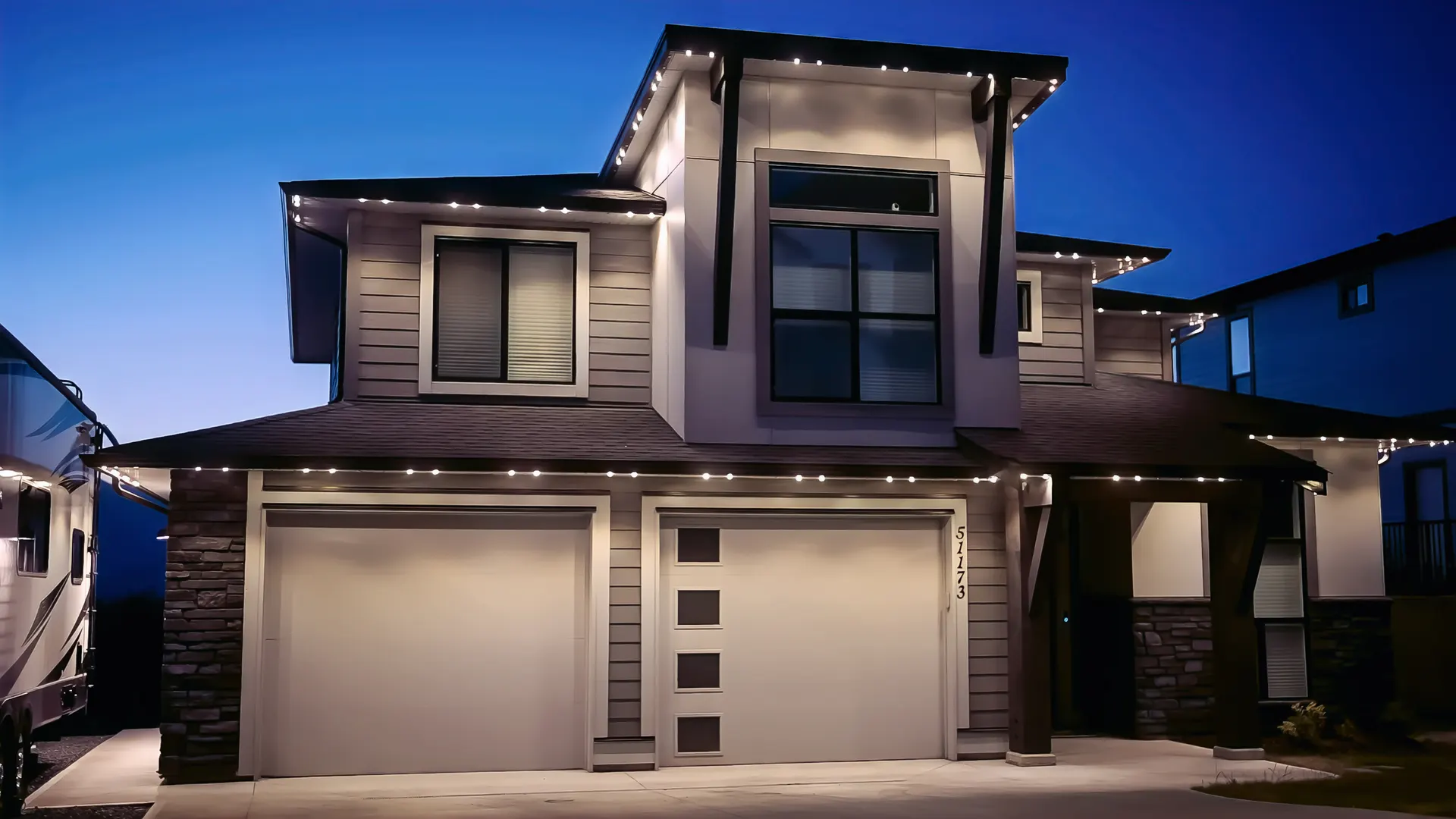
- Trace the building’s rooflines and architecture so it reads as a clean, finished shape against the night sky instead of a dark mass. That is the job of permanent architectural lighting, a color-matched system that lights the building every night and can switch to brand or seasonal color on demand.
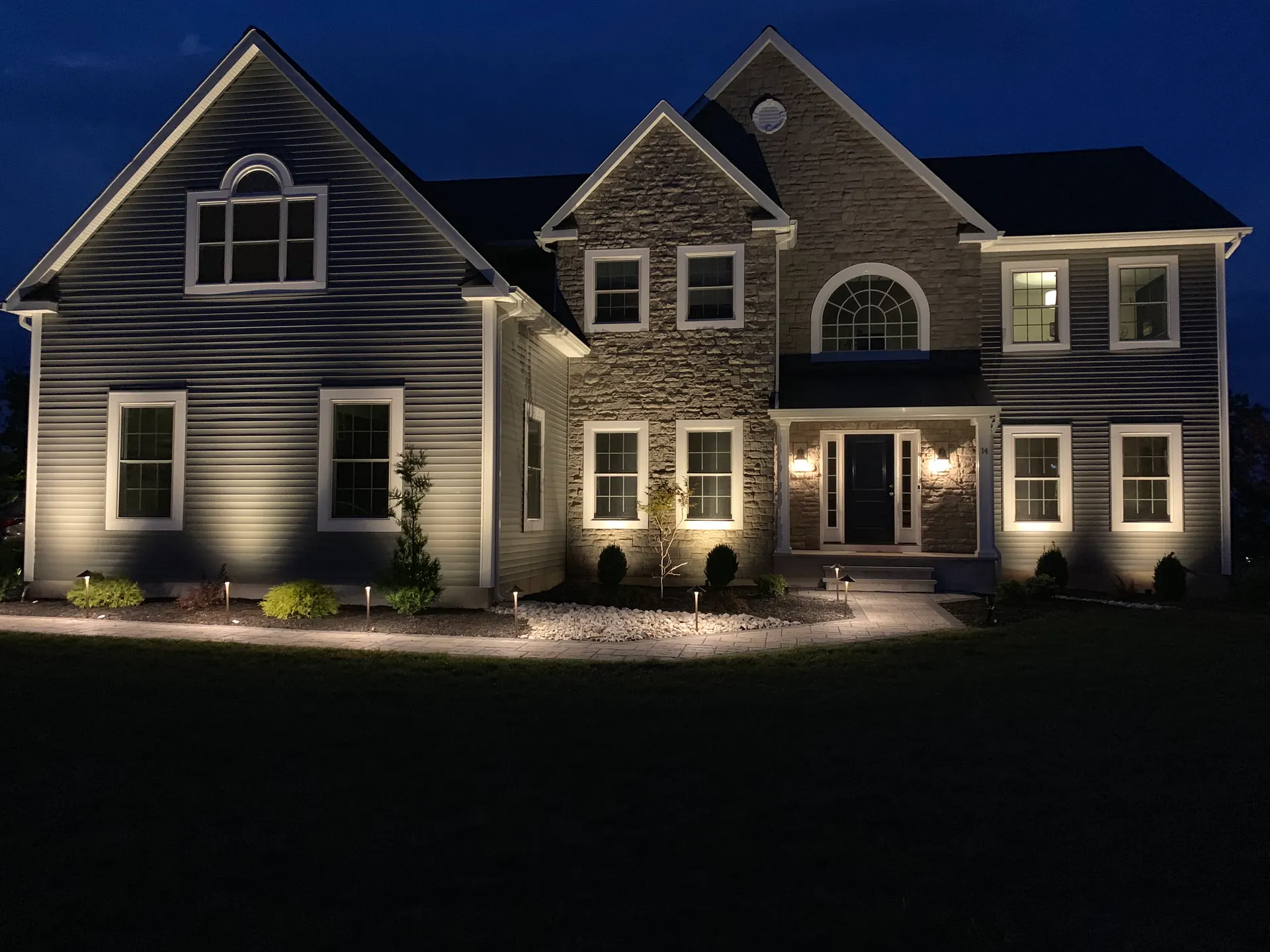
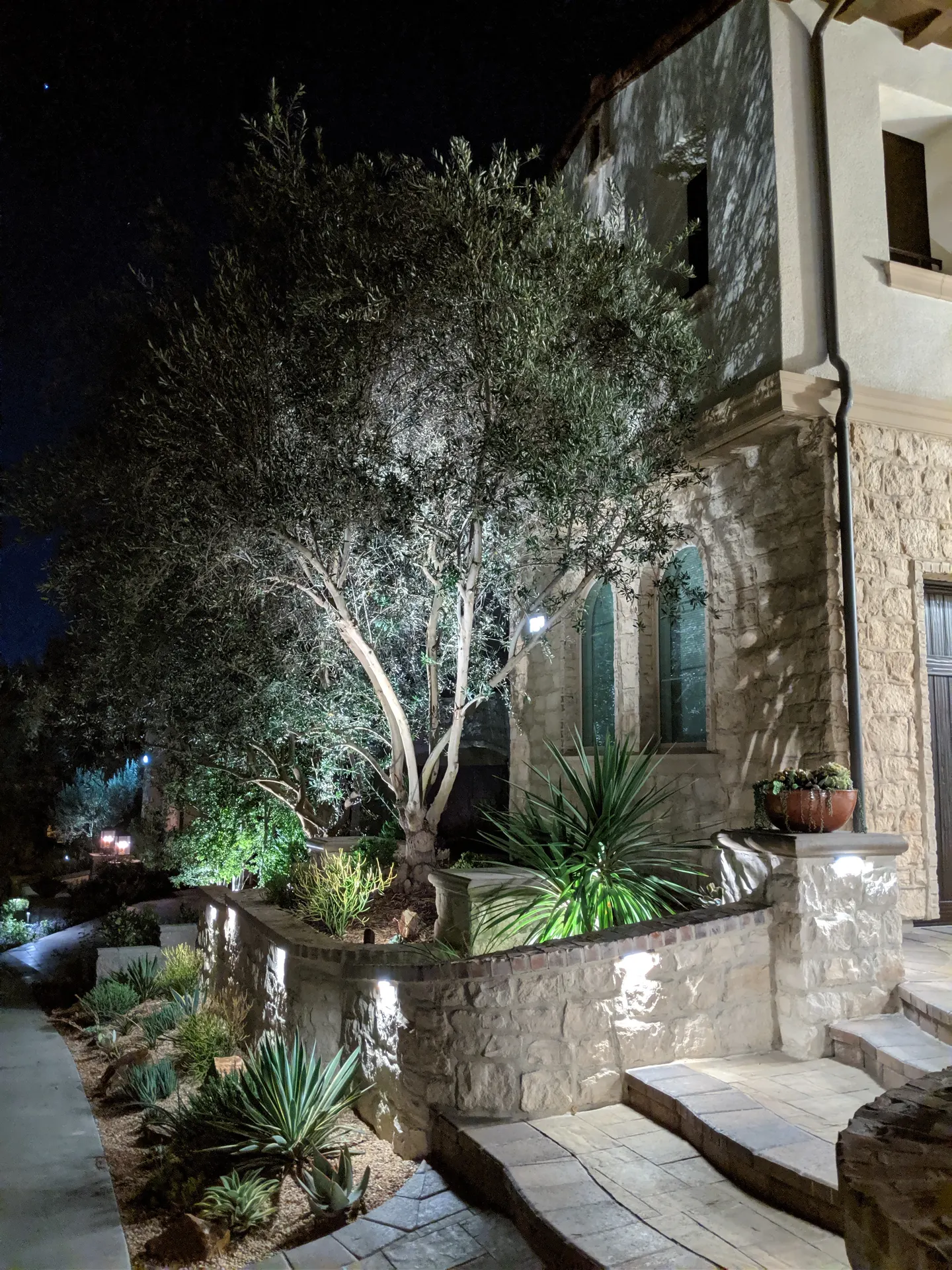
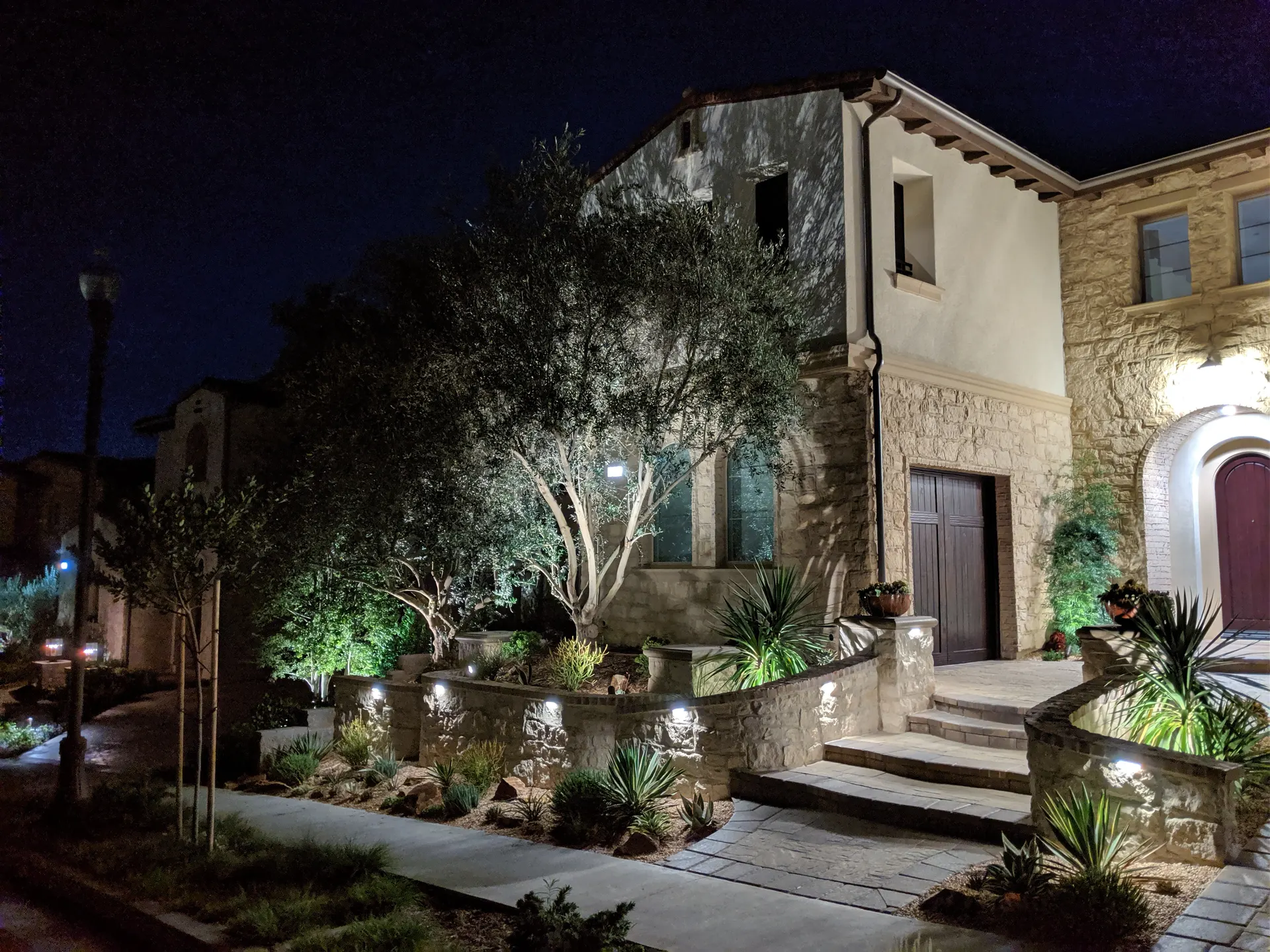
- Light the approach, the facade, the landscape, the entrance, and the parking edges, so guests can see where to go and feel comfortable getting there. That is landscape and facade lighting.
- Make the signage and entrance the clearest, best-lit thing on the property after dark, because that is what a passing customer needs in order to find you.
We lay all of that out, along with how we price it, on our commercial lighting page.
The honest bottom line
Here is what we will and will not tell you. Professional exterior lighting will make your business easier to find, more inviting to approach, and safer-feeling after dark, and the research above supports every part of that. What we will not do is promise a specific jump in foot traffic or sales, because the studies do not support a clean number like that. You have probably seen the “up to 40% more foot traffic” line repeated on a dozen websites with no study attached to it. We would rather tell you what is real.
If your building disappears at night, that is a fixable problem, and fixing it puts your best foot forward every single evening your customers are deciding where to go.
Common questions
Does exterior lighting actually increase sales? It increases the things that lead to sales: visibility, a stronger first impression, more people choosing to walk in, and a safer-feeling property. But the research does not support a guaranteed sales percentage, and one early retail study found brighter lighting increased how much merchandise shoppers handled without increasing sales in that case. Be skeptical of anyone who promises you a number.
Where does the “40% more foot traffic” statistic come from? As far as we can find, nowhere citable. It is repeated across landscaping and lighting marketing sites without a primary source. The real, sourced figure in this space is closer to a roughly 20% average reduction in crime from improved outdoor lighting (Welsh and Farrington, 2008), which is a safety finding, not a foot-traffic one.
We are open late. Is lighting worth it for us? Especially for you. The strongest evidence is around safety and perceived safety after dark, which is exactly the window a late-hours business operates in. A property that is clearly lit is easier to find and feels safer to approach, and that matters most once the sun is down.
Want this on your home?
Book a free design consultation. We will walk your property, design the look around your rooflines, and hand you a clear written quote with no obligation.